
Virtù
The Origin
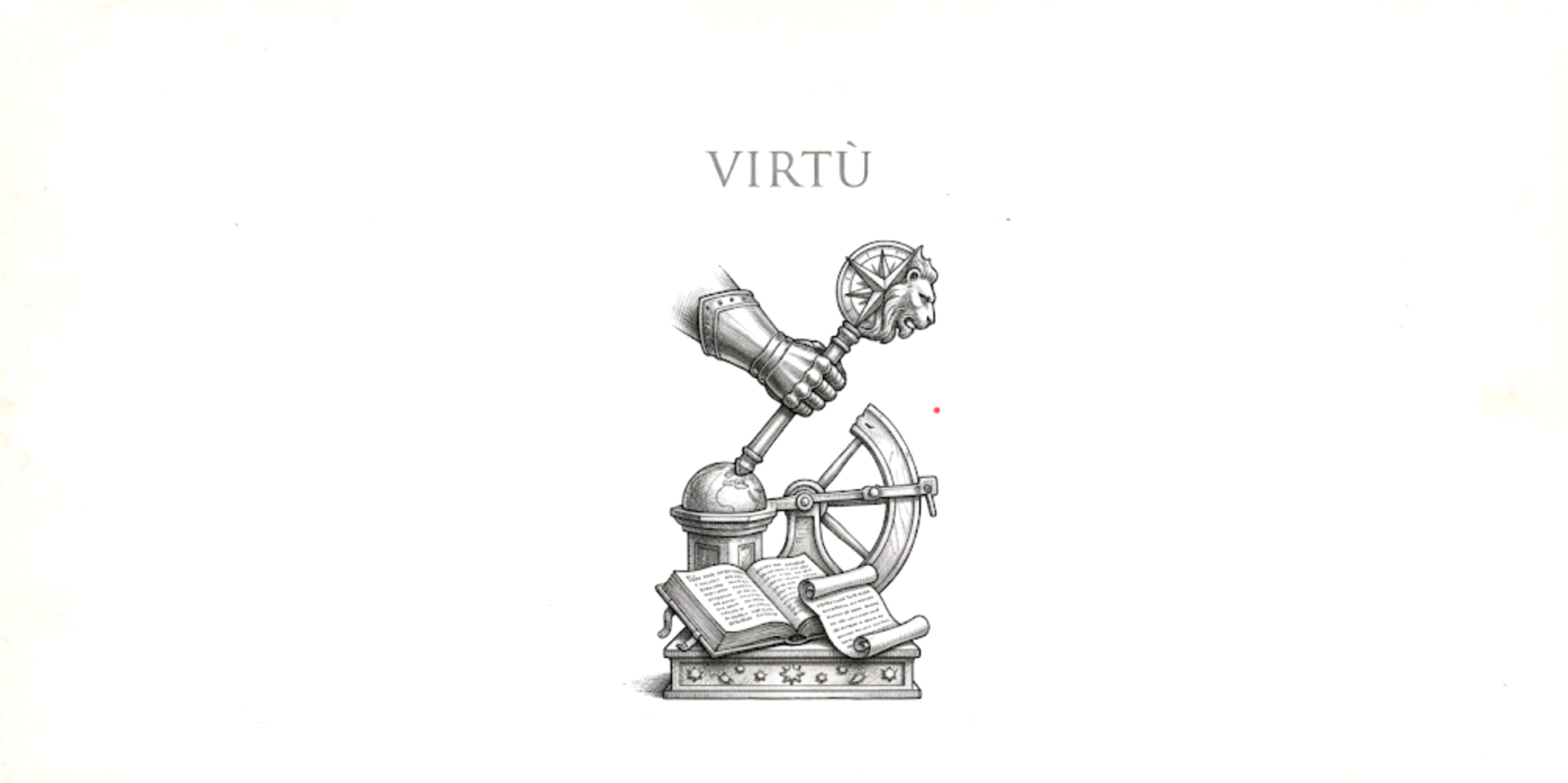
The term stems from the Latin virtus (valor, excellence), but it was radically decoupled from classical and Christian morality by Niccolò Machiavelli in his foundational 1532 treatise, The Prince. Through a lens of pragmatic political realism, Machiavelli redefined the concept to describe the essential traits of an effective ruler operating in a chaotic world.
The Definition
In Machiavellian philosophy, virtù does not denote moral goodness or ethical purity. Instead, it represents martial capability, unsentimental adaptability, and the sheer operational competence required to bend fortuna (unpredictable chance or circumstance) to one’s will. It is the situational capacity to assess reality as it is, not as it ought to be, and execute whatever structural maneuvers are necessary to maintain the integrity and power of the state.
The Corporate Application
In highly volatile markets, executive leadership frequently conflates operational consistency with effectiveness. When a sudden macroeconomic shock or disruptive technological vector (fortuna) materializes, clinging to legacy strategic playbooks out of a sense of institutional loyalty is frequently fatal. For example, a Chief Operations Officer, heavily incentivized by the predictable logistics and cost reductions of a tightly coupled, just-in-time supply chain, might resist diversifying vendor networks during a global disruption. Exercising virtù demands the pragmatic capacity to abandon sunk costs, entrenched relationships, and established operational dogmas the moment they threaten systemic survival.
Furthermore, managing internal enterprise architecture requires a highly unsentimental assessment of organizational power and incentives. An engineering division, driven by the prestige and compensation tied to rapid feature releases, tends to accumulate critical technical debt that jeopardizes platform stability. A Chief Technology Officer employing virtù does not rely on moral appeals to software engineering best practices. Instead, they pragmatically re-engineer the environment. By restructuring deployment pipelines to enforce hard compliance gates—or directly tying engineering bonuses to system uptime—they bend internal factions to their will. This Machiavellian posture shifts the C-suite mindset from hoping for an ideal, harmonious organization to actively enforcing structural resilience within a flawed, highly contingent corporate reality.
The CWO's Rule
"Markets do not reward moral consistency; they reward survival. Executive virtù is the unsentimental competence to abandon legacy systems and bend competing internal incentives to ensure the structural integrity of the enterprise."
No spam, no sharing to third party. Only you and me.


Member discussion