Fortuna’s Torrent: Architecting for Macro-Economic Volatility
The perfect roadmap cannot stop a market crash. Learn to build "dikes and dams" to survive the next macro-economic Black Swan.
Maintaining Individual Sovereignty in the Seat of Power
High-level influence requires more than data; it requires political realism. Learn to balance the Lion’s force and the Fox’s cunning.
The Fragility of Borrowed Power
Relying on a single patron’s authority creates professional fragility. We apply Machiavelli’s critique of auxiliary arms to career longevity.
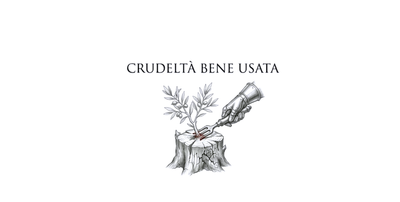
Crudeltà Bene Usata
Machiavelli's concept of crudeltà bene usata reveals why executives must execute painful restructurings in a single, decisive stroke.
Realism in Structural Reorganization
Incremental layoffs destroy system morale and drive out top talent. Learn why Machiavelli’s "Single Injury" principle is the only way to save the enterprise.
The Iron Fist: Machiavellian Surgery on the Toxic 10x Asset
Firing a high-performing founder is an excruciating necessity when they threaten systemic stability. We apply Machiavellian realism to the "Iron Fist" approach.
The Consensus Trap: Machiavellian Realism in Enterprise Governance
Systemic paralysis often stems from the pursuit of 100% departmental consensus. We apply Machiavelli’s concept of virtù to break the deadlock.
The Fragility of Nice: Competence Over Consensus
When companies prioritize consensus over competence, high performers burn out. Using Machiavelli to build structural accountability and Virtù.
The Master Craft: Calibrating Systemic Velocity
Why departmental silos persist despite "synergy." Applying Aristotelian Architectonics to align Finance, Legal, and Ops under one Master Strategy.
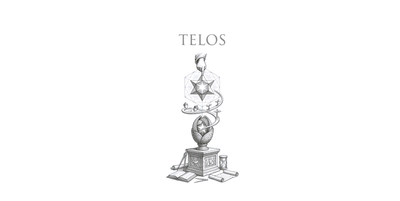
Telos (The Ultimate Purpose)
Aristotle's concept of telos redefines corporate strategy, urging executives to align operational systems with a product's inherent market purpose.
The Entelechy of Engineering: From High-Potential to High-Performance
Why high-potential talent stagnates. Using Aristotle’s Metaphysics to bridge the gap between latent ability and elite C-Suite performance.
We Are What We Repeatedly Do: Engineering Habits
Why "Core Values" posters are entirely useless. How the Chief Wise Officer uses Aristotle’s philosophy of habit to engineer a high-performing corporate culture.
The Socratic Dialogue: Debugging the Corporate Strategy
How do you kill a bad strategic initiative without destroying your colleague's ego? The Chief Wise Officer uses the ancient Socratic Method to debug corporate strategy.
The Charioteer: Harmonizing the Enterprise
Why the tension between Sales and Engineering is your company's greatest asset. How the Chief Wise Officer uses Plato's "Allegory of the Chariot" to turn corporate friction into momentum.
Discourse on the Method: Building Your Corporate OS
A great company is not a collection of geniuses; it is an average group of people operating on a genius system. How to use Descartes' famous 4-step "Method" as your corporate operating system.
The Fallacy of Cartesian Dualism: Merging Strategy and Execution
Why separating the "thinkers" (Executives) from the "doers" (Frontline) destroys a company. How the Chief Wise Officer cures Cartesian Dualism to build integrated teams.
The Wax Argument: Preserving Identity During a Pivot
How do you completely pivot your product line without destroying your company's culture? Applying René Descartes' famous "Wax Argument" to corporate identity.
The Cartesian Plane: Managing the Vectors of Growth
Why your company is moving fast but going nowhere. How the Chief Wise Officer uses René Descartes' invention of the coordinate system to align product teams and manage the vectors of growth.
The Black Swan: Preparing for the Unpredictable
Why corporate annual forecasts are dangerous illusions. How the Chief Wise Officer stops trying to predict rare "Black Swan" events and starts building an organization robust enough to survive them.
Historicism: Why AI Cannot Predict the Future
Executives are using AI to predict market trends. Karl Popper's theory of "Historicism" explains why relying on historical data to forecast human behavior is a fatal strategic trap.
The Pseudoscience of Corporate Metrics
Is your dashboard tracking real science or corporate astrology? How Karl Popper's "Demarcation Problem" exposes the vanity metrics (like NPS and Engagement) that leaders use to hide bad strategy.
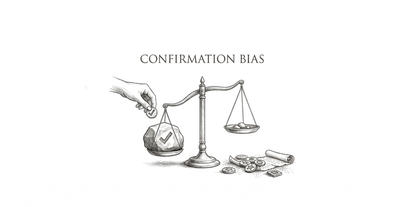
Lexicon: Confirmation Bias
Why the human brain is wired to ignore bad news. How the Chief Wise Officer overcomes Confirmation Bias to make objective, falsifiable decisions.
The Confirmation Bias Machine: Why Executives Live in Bubbles
How corporate hierarchies naturally filter out bad news, leaving the C-Suite with an illusion of success. Learn how to bypass the "Watermelon Effect" and hunt for the truth.
The Map is Not the Territory: High-Modernism & Leadership
Why executives who manage strictly by dashboards and OKRs end up destroying the very things they are trying to measure. A deep dive into the trap of "High-Modernism."
Naive Set Theory: Why Categories Break Down
We love to put customers and competitors into neat little boxes. Discover why relying on rigid categorization (Naive Set Theory) creates massive strategic blind spots.
Conway's Law: Shipping the Org Chart
Why does your company's software feel clunky and disjointed? Because your organization is clunky and disjointed. How "Conway's Law" proves that org design is product design.
The Burden of Proof in Strategy
Do you fund projects just because nobody can prove they won't work? Discover how the logical analogy of "Russell's Teapot" can save your company from wasting millions on unfalsifiable ideas.
In Praise of Idleness (Why Crunch Mode Fails)
We idolize the 80-hour work week, but mathematically and biologically, it destroys enterprise value. What Bertrand Russell's 1932 essay teaches us about the strategic necessity of doing nothing.
Ataraxia — Tranquility as a Competitive Advantage
In the boardroom, the person with the lowest heart rate wins. Why the ancient concept of "Ataraxia" (unperturbedness) is the secret to elite decision-making and negotiation.
Aphasia — The Strategic Power of Saying Nothing
In a world of loud opinions, the most powerful move is "Non-Assertion." How the Skeptic's concept of Aphasia protects you from the trap of certainty.
The Suspension of Judgment: Crisis Management for Skeptics
In a crisis, your brain screams "Do something!" But history shows that the instinct to act fast is often fatal. Why the best leaders use the ancient tool of "Epoché" to stop panic and find the truth.
The Pre-Mortem: Stoicism for Product Managers
Don't ask "What might go wrong?" Ask "The project failed. Why?" How the Stoic practice of 'Premeditatio Malorum' saves software projects.