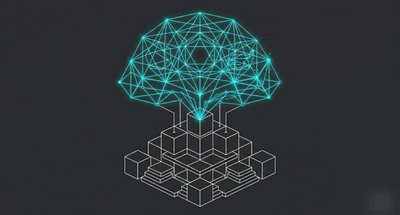
The Ontology of the Enterprise: Reconciling the Data Lake and the Data Mesh
The Data Lake handles storage, but centralized IT teams often become bottlenecks for business logic. Using Deleuze to explore the Data Mesh operating model.
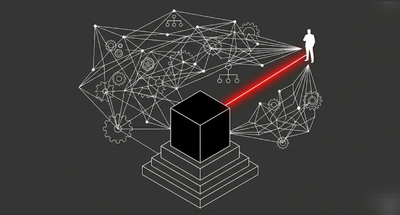
The Black Box: Executive Accountability in the Age of AI
As autonomous AI agents hallucinate risks, who takes the fall? Using Heidegger to map executive accountability and stop blaming the algorithm.
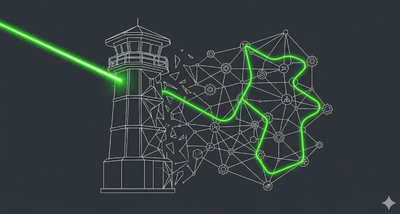
The Corporate Panopticon: Debugging Compliance
Engineering speed frequently clashes with compliance rules. We apply Michel Foucault to shift from manual policing to automated DevSecOps.
The Hallucinated Enterprise: AI and the Illusion of Data
The C-Suite deploys AI, but fragmented data often creates business hallucinations. Using Kant to explore the epistemology of predictive models.
The Prime Mover: Discovering the "Job to be Done"
Why technically flawless features fail. Applying Aristotle’s Four Causes to align engineering roadmaps with the user's "Job to be Done.
The Four Causes: The Ultimate Post-Mortem
The standard "5 Whys" post-mortem usually just ends up blaming a junior engineer. How the Chief Wise Officer uses Aristotle’s "Four Causes" to uncover the true systemic failures behind an outage.
Lexicon: Aetia (The Root Cause)
"Human error" is a symptom, not a cause. How the Chief Wise Officer uses the Greek concept of "Aetia" to uncover the true systemic incentives behind a corporate failure.
The Golden Mean: Debugging the Pace of Engineering
Move fast and break things? Or zero-defect perfectionism? How the Chief Wise Officer uses Aristotle’s "Golden Mean" to find the optimal, sustainable pace for product and engineering teams.
The Divided Line: Scaling Knowledge in Tech
You can scale your server capacity and your headcount, but how do you scale understanding? How the CWO uses Plato's "Divided Line" to eradicate tribal knowledge.
First Principles: Designing the Zero-to-One Product
Stop copying your competitors. How the Chief Wise Officer uses René Descartes' philosophy of "First Principles" to design revolutionary, Zero-to-One tech products.
René Descartes — The Architect of First Principles
René Descartes didn't use radical doubt to destroy; he used it to find the unshakeable foundation of truth. How the Chief Wise Officer uses Methodological Doubt to build brilliant tech architecture.
Technical Debt as a Hypothesis (Refactoring)
Why executives need to stop viewing technical debt as a developer's mistake. Applying Karl Popper's philosophy of science to software engineering and refactoring.
The Halting Problem: Why Perfect Predictability is Mathematically Impossible
Why the pursuit of "perfectly predictable software" or "perfectly predictable organizations" is mathematically impossible. What Alan Turing's 1936 breakthrough teaches the modern executive about resilience.
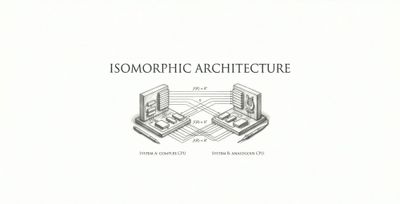
Lexicon: Isomorphic Architecture
Your software perfectly mirrors your org chart. How to use the "Inverse Conway Maneuver" to reverse-engineer your company for better product design.
Zero-Knowledge Proofs: Trust Without Verification
Data is no longer an asset; it's a liability. Discover how Zero-Knowledge Proofs (ZKPs) allow companies to verify customer identity and data without ever actually seeing or storing it.
The Quantum Apocalypse (Y2Q)
Y2Q (Year 2 Quantum) is the new Y2K. Why "Harvest Now, Decrypt Later" attacks mean your data is already at risk, even if the computer to crack it doesn't exist yet.
The Feature Factory: When Velocity Becomes a Vice
We obsess over "shipping" code to avoid the harder question: Does any of this matter? Why "Velocity" is often just Bad Faith in disguise.
Small Language Models: The Hedgehog, The Fox, and the End of the "God Model"
The era of the "God Model" (LLM) is ending. Isaiah Berlin's philosophy of the Hedgehog and the Fox explains why 2026 belongs to the specialized, local Small Language Model.
Technical Due Diligence Framework for M&A
Tech DD is more than just a code scan. This comprehensive framework covers how to audit architectural integrity, cloud unit economics, and engineering culture to ensure deal success and mitigate hidden risks.
The Monolith Defense: A C-Level Guide to Architectural Economics
Microservices are often a "Tax" on velocity and TCO. We break down the Financial, Organizational, and Technical risks of premature scaling.
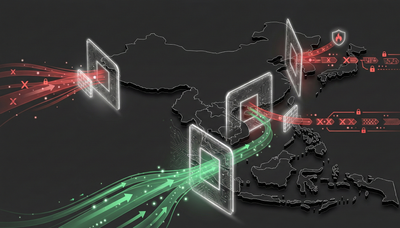
Data Sovereignty in APAC: Navigating the "Splinternet"
The "Total Lockdown" era is over. How to navigate Vietnam's new 2025 Data Law and China's eased PIPL rules using a Federated Architecture.
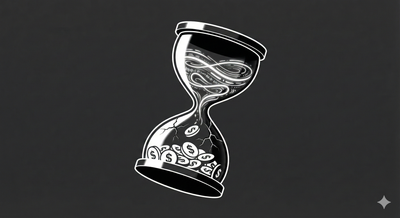
Disaster Recovery: Defining RTO & RPO for Executives
The CEO wants "zero downtime," but is he willing to pay for it? How to translate technical backups into business insurance policies.
The DevOps Bottleneck: Moving from "TicketOps" to Platform Engineering
If your DevOps team spends all day closing tickets, you have a scaling problem. How to move from manual provisioning to "The Golden Path."
DevSecOps Realities: Automating Compliance Without Killing Velocity
Security usually slows you down. DevSecOps is the art of making security invisible. How to automate SAST/DAST in your pipeline.
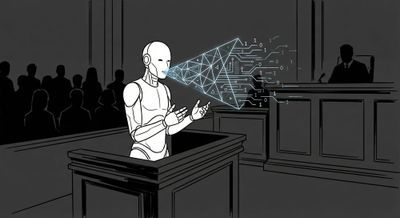
AI Governance: Preventing Hallucinations (The "Air Canada" Defense)
The Air Canada chatbot lawsuit changed everything. How to implement Technical Guardrails, Input/Output filters, and "LLM-as-a-Judge" to prevent AI liability.
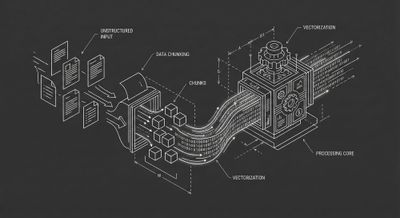
The RAG Architecture Guide: Building the Pipeline (Beyond the Basics)
RAG is more than just a Vector DB. A technical guide to Chunking Strategies, Hybrid Search, Re-Ranking, and the 5-Stage ETL pipeline for production AI.
Platform Engineering: The End of "Shift Left" (Cognitive Load Strategy)
For the last 10 years, the tech industry has been shouting one slogan: "You Build It, You Run It.
Agentic AI: When Software Has "Will"
We are moving from software that "Talks" (LLMs) to software that "Acts" (Agents). The risks and rewards of delegating "Will" to machines.