Mercenari
Machiavelli’s concept of mercenari exposes why relying on outsourced talent and rented infrastructure frequently causes corporate collapse in a crisis.
Lo Stato
Machiavelli’s concept of lo stato reveals how executives must institutionalize the enterprise, ensuring it outlives individual egos and talent.
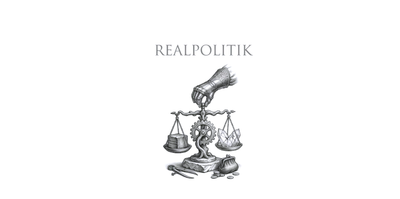
Realpolitik
Ludwig von Rochau's concept of Realpolitik reveals how practical power dynamics and raw incentives drive enterprise systems over ideological core values.
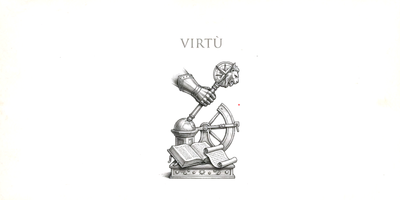
Virtù
Machiavelli’s concept of virtù reveals how pragmatic, adaptable competence helps executives master market volatility and drive success.
Niccolò Machiavelli: The Theoretical Foundations of Political Realism and Their Modern Resonances
Niccolò Machiavelli’s breakthrough of "effectual truth" offers a lens for modern leaders to bridge the gap between strategy and execution.
Rhizome (Decentralized Network)
Deleuze's concept of the rhizome provides the precise architectural blueprint for replacing centralized data bottlenecks with a scalable data mesh.
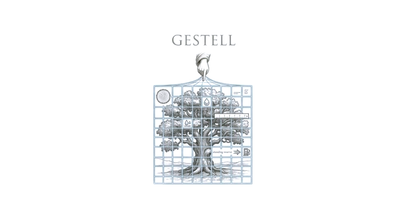
Gestell (Enframing)
Heidegger's concept of Gestell reveals how viewing the market as an extractable resource blinds executives to compounding systemic risks.
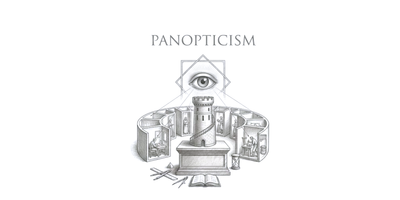
Panopticism (Internalized Governance)
Foucault's panopticism reveals how embedding automated security into CI/CD pipelines transforms compliance from a chokepoint into a systemic habit.
Noumenon (The thing-in-itself vs. the observation)
Kant’s concept of the noumenon exposes the critical gap between raw business reality and the dashboard metrics fed to enterprise AI systems.
Architectonike (The Master Science/Craft)
Aristotle’s concept of architectonike defines the executive discipline of directing competing departmental crafts toward a unified systemic goal.
Phronesis
Aristotle's concept of phronesis reveals how practical wisdom helps executives adapt universal tech frameworks to messy operational realities.
Lexicon: Ethos (Character via Habit)
Why your company's "About Us" page means nothing. How the Chief Wise Officer uses the Greek concept of "Ethos" to define culture through daily operational habits.
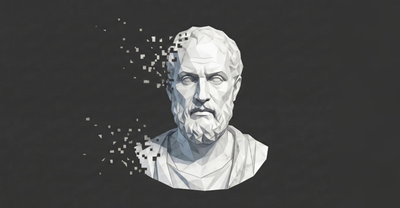
Bio: Aristotle — The First Pragmatist and the Operational Blueprint
Aristotle didn't just think; he observed. By grounding his philosophy in the meticulous study of living specimens, he broke from Platonic abstraction to invent a framework for reality based on what we can see, touch, and verify.
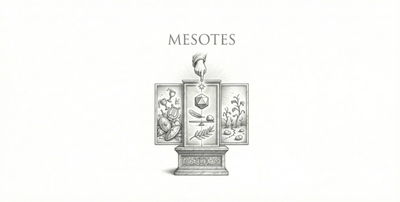
Lexicon: Mesotes (The Optimal Balance)
Why meeting halfway is usually a terrible business strategy. How the Chief Wise Officer uses the Greek concept of "Mesotes" to find the peak of optimal performance.
Lexicon: Noesis (Systemic Understanding)
What happens when the corporate playbook fails? How the Chief Wise Officer uses the Platonic concept of "Noesis" to lead through unprecedented crises and market shifts.
Lexicon: Elenchus (Collaborative Refutation)
How do you shoot down a bad executive strategy without triggering a boardroom turf war? The Chief Wise Officer uses the Platonic tool of "Elenchus."
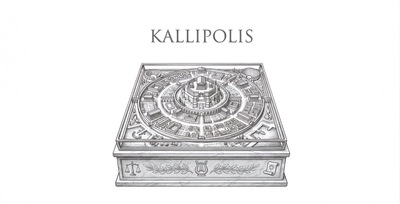
Lexicon: Kallipolis (The Beautiful City)
A company is more than just a revenue engine; it is a human ecosystem. How the Chief Wise Officer uses Plato's "Kallipolis" to design the ultimate corporate culture.
Lexicon: Sophrosyne (Temperance)
What happens when Sales or Engineering becomes too powerful? How the Chief Wise Officer uses the Platonic virtue of "Sophrosyne" to prevent toxic corporate monocultures.
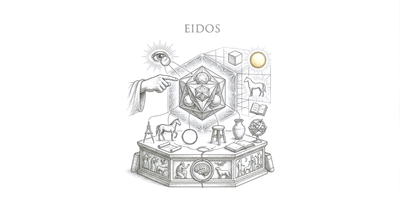
Lexicon: Eidos (The Blueprint)
What separates a beautifully unified software platform from a bloated, Frankenstein product? The Chief Wise Officer's strict defense of the product's "Eidos."
Lexicon: Maieutics (Intellectual Midwifery)
What is Maieutics? Learn how the Chief Wise Officer uses Plato's concept of intellectual midwifery to coach engineering teams and foster deep critical thinking.
Lexicon: Primary and Secondary Qualities
Why executives waste time arguing over dashboard colors while the database crashes. Using Descartes' Primary and Secondary qualities to prioritize product roadmaps.
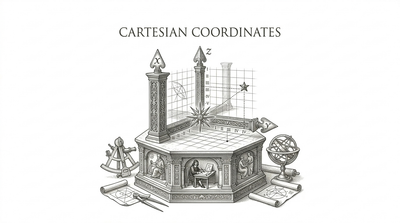
Lexicon: Cartesian Coordinates
How the invention of the X and Y axis changed the world, and how modern executives use Cartesian Coordinates to turn raw data into strategic direction.
René Descartes — The Architect of First Principles
René Descartes didn't use radical doubt to destroy; he used it to find the unshakeable foundation of truth. How the Chief Wise Officer uses Methodological Doubt to build brilliant tech architecture.
Lexicon: Corroboration
Why Karl Popper argued you can never mathematically "confirm" a strategy, only "corroborate" it by trying to destroy it.
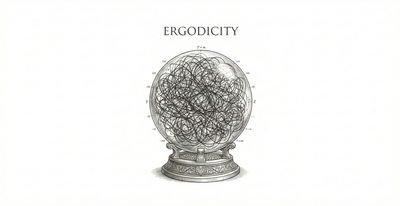
Lexicon: Ergodicity
Why making decisions based on "average" outcomes can bankrupt your company. Understanding Ergodicity and the fatal math of the absorbing barrier.
Lexicon: Verisimilitude
Why the search for a "perfect" strategy causes analysis paralysis. How Karl Popper's concept of Verisimilitude (truthlikeness) applies to Agile product development.
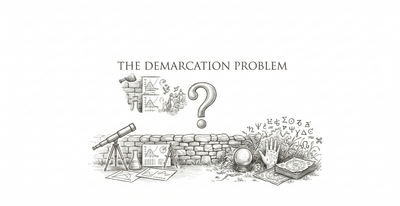
Lexicon: The Demarcation Problem
How do you tell the difference between a data-driven strategy and a consultant's horoscope? Karl Popper's "Demarcation Problem" is the ultimate BS-detector.
Lexicon: The Paradox of Tolerance
Why does a highly tolerant corporate culture require you to ruthlessly fire the "Brilliant Jerk"? Karl Popper's famous paradox explains the boundary of psychological safety.
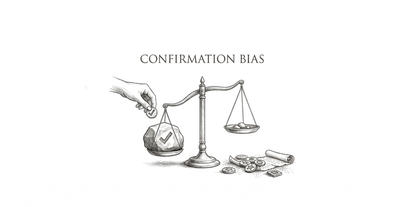
Lexicon: Confirmation Bias
Why the human brain is wired to ignore bad news. How the Chief Wise Officer overcomes Confirmation Bias to make objective, falsifiable decisions.
Bio: Karl Popper — The Black Swan Slayer
Why the corporate obsession with "confirming data" is destroying your strategy. How Karl Popper revolutionized science by teaching us to hunt for the Black Swan.
Lexicon: Falsifiability
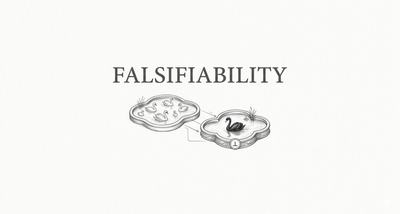
If a strategy cannot be proven wrong, it is useless. How to use Karl Popper's concept of Falsifiability to stop funding bulletproof corporate nonsense.
Lexicon: Undecidability
Not all problems can be solved with "more data." How to recognize mathematically Undecidable problems in the boardroom and why they require judgment, not algorithms.