Fortuna’s Torrent: Architecting for Macro-Economic Volatility
The perfect roadmap cannot stop a market crash. Learn to build "dikes and dams" to survive the next macro-economic Black Swan.
Maintaining Individual Sovereignty in the Seat of Power
High-level influence requires more than data; it requires political realism. Learn to balance the Lion’s force and the Fox’s cunning.
Mercenari
Machiavelli’s concept of mercenari exposes why relying on outsourced talent and rented infrastructure frequently causes corporate collapse in a crisis.
The Fragility of Borrowed Power
Relying on a single patron’s authority creates professional fragility. We apply Machiavelli’s critique of auxiliary arms to career longevity.
Crudeltà Bene Usata
Machiavelli's concept of crudeltà bene usata reveals why executives must execute painful restructurings in a single, decisive stroke.
Realism in Structural Reorganization
Incremental layoffs destroy system morale and drive out top talent. Learn why Machiavelli’s "Single Injury" principle is the only way to save the enterprise.
Lo Stato
Machiavelli’s concept of lo stato reveals how executives must institutionalize the enterprise, ensuring it outlives individual egos and talent.
The Iron Fist: Machiavellian Surgery on the Toxic 10x Asset
Firing a high-performing founder is an excruciating necessity when they threaten systemic stability. We apply Machiavellian realism to the "Iron Fist" approach.
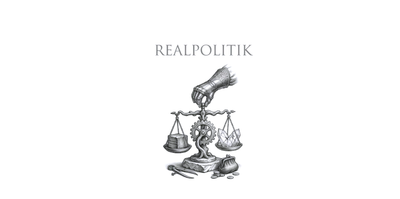
Realpolitik
Ludwig von Rochau's concept of Realpolitik reveals how practical power dynamics and raw incentives drive enterprise systems over ideological core values.
The Consensus Trap: Machiavellian Realism in Enterprise Governance
Systemic paralysis often stems from the pursuit of 100% departmental consensus. We apply Machiavelli’s concept of virtù to break the deadlock.
Virtù
Machiavelli’s concept of virtù reveals how pragmatic, adaptable competence helps executives master market volatility and drive success.
The Fragility of Nice: Competence Over Consensus
When companies prioritize consensus over competence, high performers burn out. Using Machiavelli to build structural accountability and Virtù.
Niccolò Machiavelli: The Theoretical Foundations of Political Realism and Their Modern Resonances
Niccolò Machiavelli’s breakthrough of "effectual truth" offers a lens for modern leaders to bridge the gap between strategy and execution.
The Ontology of the Enterprise: Reconciling the Data Lake and the Data Mesh
The Data Lake handles storage, but centralized IT teams often become bottlenecks for business logic. Using Deleuze to explore the Data Mesh operating model.
Rhizome (Decentralized Network)
Deleuze's concept of the rhizome provides the precise architectural blueprint for replacing centralized data bottlenecks with a scalable data mesh.
The Black Box: Executive Accountability in the Age of AI
As autonomous AI agents hallucinate risks, who takes the fall? Using Heidegger to map executive accountability and stop blaming the algorithm.
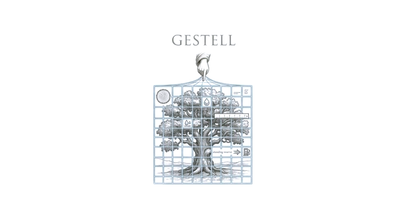
Gestell (Enframing)
Heidegger's concept of Gestell reveals how viewing the market as an extractable resource blinds executives to compounding systemic risks.
The Corporate Panopticon: Debugging Compliance
Engineering speed frequently clashes with compliance rules. We apply Michel Foucault to shift from manual policing to automated DevSecOps.
Panopticism (Internalized Governance)
Foucault's panopticism reveals how embedding automated security into CI/CD pipelines transforms compliance from a chokepoint into a systemic habit.
The Hallucinated Enterprise: AI and the Illusion of Data
The C-Suite deploys AI, but fragmented data often creates business hallucinations. Using Kant to explore the epistemology of predictive models.
Noumenon (The thing-in-itself vs. the observation)
Kant’s concept of the noumenon exposes the critical gap between raw business reality and the dashboard metrics fed to enterprise AI systems.
The Master Craft: Calibrating Systemic Velocity
Why departmental silos persist despite "synergy." Applying Aristotelian Architectonics to align Finance, Legal, and Ops under one Master Strategy.
Architectonike (The Master Science/Craft)
Aristotle’s concept of architectonike defines the executive discipline of directing competing departmental crafts toward a unified systemic goal.
The Prime Mover: Discovering the "Job to be Done"
Why technically flawless features fail. Applying Aristotle’s Four Causes to align engineering roadmaps with the user's "Job to be Done.
Telos (The Ultimate Purpose)
Aristotle's concept of telos redefines corporate strategy, urging executives to align operational systems with a product's inherent market purpose.
The Entelechy of Engineering: From High-Potential to High-Performance
Why high-potential talent stagnates. Using Aristotle’s Metaphysics to bridge the gap between latent ability and elite C-Suite performance.
Phronesis
Aristotle's concept of phronesis reveals how practical wisdom helps executives adapt universal tech frameworks to messy operational realities.
We Are What We Repeatedly Do: Engineering Habits
Why "Core Values" posters are entirely useless. How the Chief Wise Officer uses Aristotle’s philosophy of habit to engineer a high-performing corporate culture.
Lexicon: Ethos (Character via Habit)
Why your company's "About Us" page means nothing. How the Chief Wise Officer uses the Greek concept of "Ethos" to define culture through daily operational habits.
Bio: Aristotle — The First Pragmatist and the Operational Blueprint
Aristotle didn't just think; he observed. By grounding his philosophy in the meticulous study of living specimens, he broke from Platonic abstraction to invent a framework for reality based on what we can see, touch, and verify.
The Four Causes: The Ultimate Post-Mortem
The standard "5 Whys" post-mortem usually just ends up blaming a junior engineer. How the Chief Wise Officer uses Aristotle’s "Four Causes" to uncover the true systemic failures behind an outage.
Lexicon: Aetia (The Root Cause)
"Human error" is a symptom, not a cause. How the Chief Wise Officer uses the Greek concept of "Aetia" to uncover the true systemic incentives behind a corporate failure.