
The Philosopher-King: Elevating the Executive

Every technology company eventually hits a critical inflection point in its leadership.
In the early days, the company is usually led by pure operators, brilliant engineers who can write flawless code, or relentless salespeople who can close massive deals. They are tactical experts. But as the company scales into a global enterprise, tactical expertise is no longer enough to steer the ship.
When a company reaches scale, the executive team faces problems that cannot be solved simply by working harder or shipping faster. They face complex, abstract challenges: How do we design an organizational structure that scales without losing its agility? How do we balance short-term revenue with long-term technological sustainability? What is our moral responsibility regarding user data?
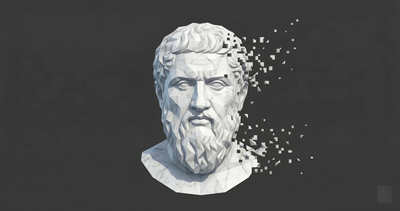
To answer these questions, a tactical leader must evolve into a strategic thinker. To understand this evolution, the Chief Wise Officer looks to the pinnacle of Plato’s political philosophy: The Philosopher-King.
The Union of Power and Wisdom
In The Republic, Plato looked at the city-states of ancient Greece and saw a tragic divide.
The people who held the power (the Kings and politicians) were often driven by ego, short-term popularity, and pure ambition. They lacked deep, systemic wisdom. On the other hand, the people who possessed deep wisdom and understood the fundamental truths of the world (the Philosophers) had no practical power to enact change. They sat on the sidelines.
Plato declared that society would never find peace or achieve true excellence until this divide was closed. He argued that the ultimate leader must be a "Philosopher-King"—a rare individual who possesses the practical power and authority to rule, combined with the deep, rigorous intellectual wisdom of a philosopher.
The Corporate Divide: The MBA vs. The Engineer
In the modern tech industry, we suffer from the exact same Platonic divide. We just use different titles.
We often separate the "Kings" from the "Philosophers."
- The Kings (Pure Business Leaders): These are executives who understand P&L, market expansion, and operational efficiency. However, they sometimes treat the underlying technology as a "black box," fundamentally misunderstanding the deep architectural constraints of what their company actually builds.
- The Philosophers (Pure Technical Leaders): These are the brilliant system architects and principal engineers. They understand the codebase and the systems. However, they sometimes lack the practical business acumen to align that architecture with market realities, user psychology, and revenue models.
When a company is divided like this, the strategy shatters. The business side promises the impossible, and the technical side builds the unmarketable.
The CWO Strategy: Cultivating the Hybrid Leader
The most admired, enduring tech companies in the world are led by modern Philosopher-Kings. Think of leaders like Satya Nadella at Microsoft, executives who possess a profound, practitioner-level understanding of cloud infrastructure, seamlessly paired with deep empathy, business strategy, and cultural wisdom.
The Chief Wise Officer actively cultivates this hybrid leadership within the C-Suite.
1. Demand Cross-Pollination You cannot lead a technology company if you are purely a business operator, and you cannot lead an enterprise if you are purely a technologist. The CWO mandates that technical leaders learn financial modeling, organizational psychology, and market dynamics. Simultaneously, they require the Go-To-Market executives to understand the basics of system architecture, technical debt, and deployment cycles. The Philosopher-King must speak both languages fluently.
2. Elevate the Horizon A pure operator only looks at the next quarter. A Philosopher-King looks at the next decade. The CWO trains the executive team to elevate their horizon. When making a major architectural or business decision, you do not just ask, "Will this increase Q3 revenue?" You must also ask the philosophical questions: "What kind of corporate culture does this incentive structure create? Are we building an ecosystem our developers are proud of?"
3. Lead with Intellectual Humility The greatest trait of Plato's philosopher was the constant acknowledgment of what they did not know. When a leader fuses power with wisdom, they stop leading by ego and mandate. They begin to lead by inquiry. They foster environments where the best idea wins, regardless of where it came from in the organizational hierarchy.
Conclusion: The Ultimate Executive
Scaling a tech company is incredibly difficult, but it is a known science. We know how to scale servers, and we know how to scale sales teams.
The true challenge is scaling wisdom.
Do not settle for a C-Suite composed strictly of narrow tacticians. Demand leaders who can execute flawlessly while thinking deeply. When your executives become Philosopher-Kings, you stop just running a profitable business, and you begin to build an enduring, thriving institution.
No spam, no sharing to third party. Only you and me.




Member discussion