
The Confirmation Bias Machine: Why Executives Live in Bubbles

There is a terrifying moment in the lifecycle of every failing initiative. It happens right before the collapse.
The leadership team looks around the table. The quarterly presentation is filled with charts pointing up and to the right. The slide deck confirms that the new strategic pivot is a stroke of genius. The executives feel a profound sense of confidence.
Six months later, the product launches to crickets, the company misses earnings, and the board demands resignations.
The C-Suite is usually stunned. "Why didn't anyone tell us this wasn't working?" they ask.
The truth is, the organization did know. The frontline sales reps knew the new product was overpriced. The junior engineers knew the codebase was a house of cards. The customer support team knew churn was accelerating.
But that data never made it to the boardroom. Because without realizing it, the executive team had built a Confirmation Bias Machine, a corporate hierarchy designed specifically to filter out Karl Popper's "Black Swans" (bad news) and deliver only the comfortable, confirming "White Swans" to the top.
The Watermelon Effect
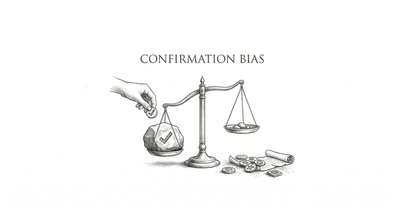
In behavioral psychology, Confirmation Bias is the human tendency to search for, interpret, and favor information that confirms our pre-existing beliefs. We naturally ignore the data that proves us wrong.
When you scale this psychological flaw across a massive organization, it becomes structural. It manifests as The Watermelon Effect: The metrics look green on the outside (to the executives), but they are bleeding red on the inside (at the ground level).
How does a red project turn green as it travels up the org chart? Through perfectly rational self-preservation.
Imagine a junior engineer discovers a fatal flaw in the new flagship software. They report it to their Engineering Manager. The Manager knows that if they tell the Director that the project is doomed, it reflects poorly on their leadership. So, the Manager softens the message: "We have some technical debt, but we are managing it." The Director reports to the VP: "The timeline is tight, but the team is working hard to hit the deadline." The VP reports to the C-Suite: "We are on track for a successful launch."
At every layer of the hierarchy, the "falsifying" data is sanded down. The bad news is filtered out. By the time the data reaches the top, it has been completely inverted to confirm the leadership's original vision.
The Danger of the "Yes" Culture
Executives often blame middle management for this deception, but the Chief Wise Officer knows the fault lies at the top. The filter exists because the leadership inadvertently demanded it.
If a leader has a history of "shooting the messenger", if they react to bad news with frustration, or if they promote the directors who always hit their optimistic (but fabricated) targets over the ones who report realistic, difficult truths, the organization learns instantly.
The company transforms into a machine that manufactures confirmation. The executives become trapped in an epistemic bubble, completely insulated from the actual territory. They are managing a fiction.
The CWO Strategy: Piercing the Bubble
If Karl Popper taught us that strategy only survives through rigorous attempts to falsify it, then a leader's primary job is to bypass the confirmation filters and actively hunt for the bad news.
1. Institutionalize the "Murder Board" In military and intelligence circles, a "Murder Board" (or Red Team) is a group of experts specifically assigned to attack a proposed plan. Their only job is to find the fatal flaws. Before you approve a major initiative, assign three of your smartest, most cynical employees to a Red Team. Give them full immunity. Tell them their bonus depends on their ability to tear the SVP's plan to shreds. If the plan survives the Murder Board, it is a robust strategy.
2. The Skip-Level Autopsy You cannot rely solely on your direct reports for ground truth. You must build channels that bypass the middle management filter. Hold regular "skip-level" meetings with frontline employees, the people actually writing the code and talking to the angry customers. Do not ask them, "How are things going?" (They will just say "fine" to be polite). Ask them specific, falsifying questions: "If this product launch fails next month, what will be the exact reason?" 3. Reward the Bearer of Bad News The culture of an organization is defined by who gets promoted. If you only promote the cheerleaders, you will build a cheerleading squad. The next time a manager walks into your office, admits that a project is failing, and recommends shutting it down, even though it hurts their own department's budget, you must publicly celebrate them. You must make it clear that the highest virtue in your company is not blind optimism, but objective truth.
Conclusion: The Anxiety of Leadership
Living outside the bubble is uncomfortable. It is much more pleasant to sit in a boardroom and look at green dashboards that tell you how brilliant your strategy is.
But the Chief Wise Officer accepts the anxiety of reality. They know that a strategy built on manufactured confirmation will shatter the moment it touches the open market.
Break your own bubble before the market breaks it for you. Actively seek out the people who disagree with you. Demand the data that ruins your day. It is the only way to ensure your company survives tomorrow.
No spam, no sharing to third party. Only you and me.




Member discussion