
Telos (The Ultimate Purpose)
The Origin
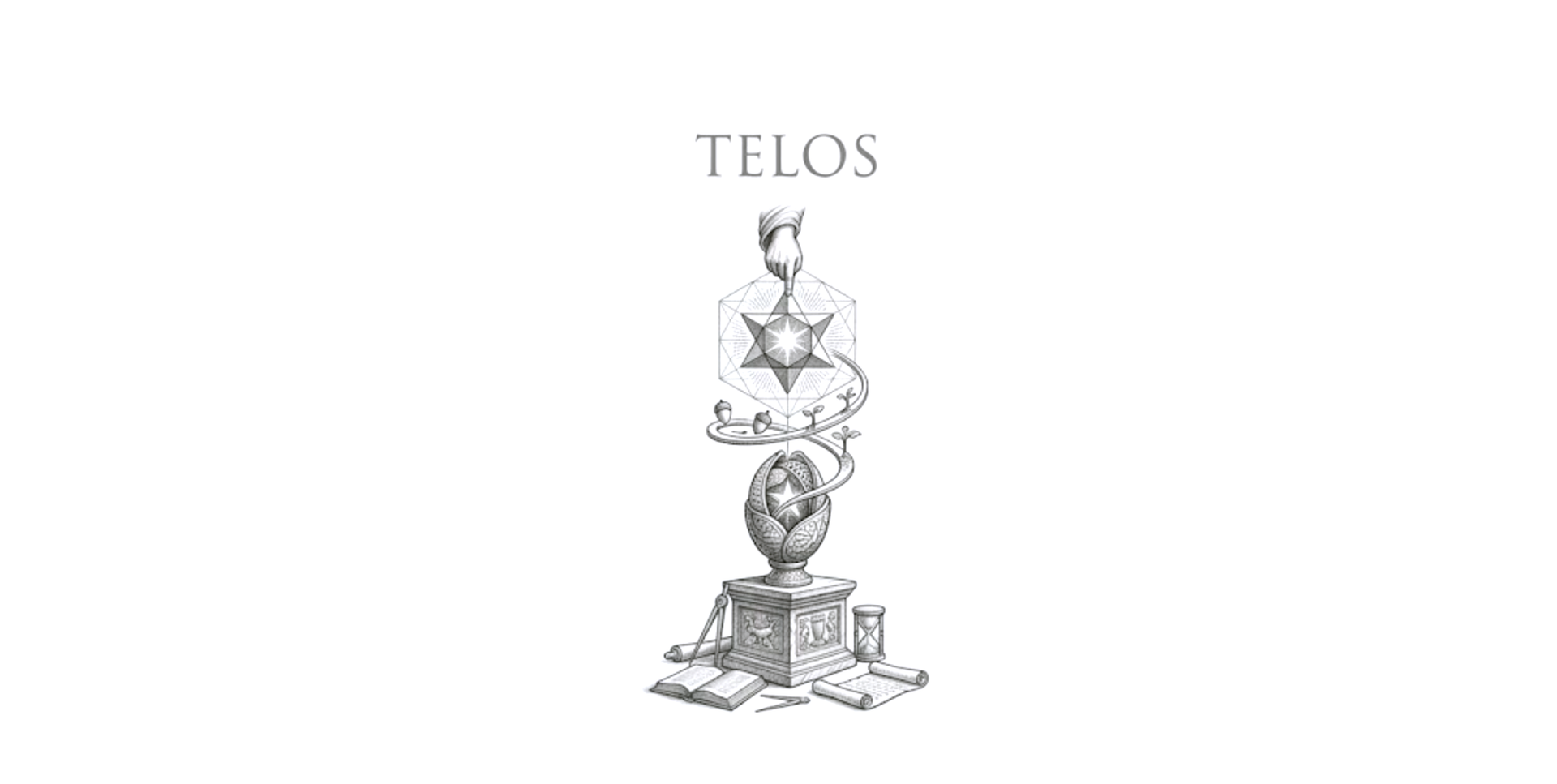
The term originates from the Ancient Greek τέλος (telos), meaning end, purpose, or goal. It is a foundational concept in Aristotle’s philosophy, explicitly formalized in his Physics and Metaphysics within the doctrine of the four causes. Among these, the "final cause" (causa finalis or telos) represents the ultimate reason for a thing's existence or the natural end toward which a process is directed.
The Definition
In classical teleology, telos is not simply an objective or a measurable output; it is the inherent purpose or final state of a subject. It dictates what an entity is fundamentally designed to become. Rather than describing what a system currently does, telos defines the destination that governs its structural development and essential nature.
The Corporate Application
Aristotelian teleology offers a stark corrective to the modern C-suite's reliance on proxy metrics. Executive teams frequently mistake localized KPIs, such as a marketing department's lead generation quotas or an IT division's server uptime, for a product's actual telos. When a system's overarching reason for market existence becomes decoupled from localized operational incentives, enterprise architecture tends to fracture. An engineering division might optimize heavily for cloud cost reduction to satisfy their immediate budgetary incentives, inadvertently stripping away the heavy computational power required to fulfill the platform's core market function. This structural misalignment rarely registers on an executive dashboard until the product has already lost its competitive utility.
Applying a teleological lens requires leaders to design organizational architecture backward from the telos. If the ultimate purpose of a massive data pipeline is low-latency trade execution, every systemic trade-off must serve that end. Data governance, infrastructure provisioning, and product management should probabilistically align their isolated goals toward this final cause. Without a rigorously defined telos, corporations often devolve into a collection of siloed departments optimizing strictly for their own survival and incentive structures, rather than advancing the inherent market purpose of the organization.
The CWO's Rule
"Metrics measure operational velocity, but telos dictates the destination. A system optimized for the wrong ultimate purpose operates efficiently only toward its own irrelevance."
No spam, no sharing to third party. Only you and me.




Member discussion