The Black Swan: Preparing for the Unpredictable
Why corporate annual forecasts are dangerous illusions. How the Chief Wise Officer stops trying to predict rare "Black Swan" events and starts building an organization robust enough to survive them.
Historicism: Why AI Cannot Predict the Future
Executives are using AI to predict market trends. Karl Popper's theory of "Historicism" explains why relying on historical data to forecast human behavior is a fatal strategic trap.
The Pseudoscience of Corporate Metrics
Is your dashboard tracking real science or corporate astrology? How Karl Popper's "Demarcation Problem" exposes the vanity metrics (like NPS and Engagement) that leaders use to hide bad strategy.
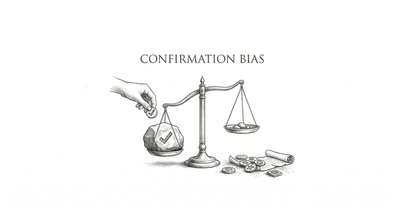
Lexicon: Confirmation Bias
Why the human brain is wired to ignore bad news. How the Chief Wise Officer overcomes Confirmation Bias to make objective, falsifiable decisions.
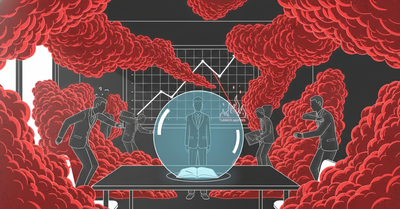
The Confirmation Bias Machine: Why Executives Live in Bubbles
How corporate hierarchies naturally filter out bad news, leaving the C-Suite with an illusion of success. Learn how to bypass the "Watermelon Effect" and hunt for the truth.
The Map is Not the Territory: High-Modernism & Leadership
Why executives who manage strictly by dashboards and OKRs end up destroying the very things they are trying to measure. A deep dive into the trap of "High-Modernism."
Naive Set Theory: Why Categories Break Down
We love to put customers and competitors into neat little boxes. Discover why relying on rigid categorization (Naive Set Theory) creates massive strategic blind spots.
Conway's Law: Shipping the Org Chart
Why does your company's software feel clunky and disjointed? Because your organization is clunky and disjointed. How "Conway's Law" proves that org design is product design.
The Burden of Proof in Strategy
Do you fund projects just because nobody can prove they won't work? Discover how the logical analogy of "Russell's Teapot" can save your company from wasting millions on unfalsifiable ideas.
In Praise of Idleness (Why Crunch Mode Fails)
We idolize the 80-hour work week, but mathematically and biologically, it destroys enterprise value. What Bertrand Russell's 1932 essay teaches us about the strategic necessity of doing nothing.
Ataraxia — Tranquility as a Competitive Advantage
In the boardroom, the person with the lowest heart rate wins. Why the ancient concept of "Ataraxia" (unperturbedness) is the secret to elite decision-making and negotiation.
Aphasia — The Strategic Power of Saying Nothing
In a world of loud opinions, the most powerful move is "Non-Assertion." How the Skeptic's concept of Aphasia protects you from the trap of certainty.
The Suspension of Judgment: Crisis Management for Skeptics
In a crisis, your brain screams "Do something!" But history shows that the instinct to act fast is often fatal. Why the best leaders use the ancient tool of "Epoché" to stop panic and find the truth.
The Pre-Mortem: Stoicism for Product Managers
Don't ask "What might go wrong?" Ask "The project failed. Why?" How the Stoic practice of 'Premeditatio Malorum' saves software projects.
Lexicon: Mauvaise Foi (Bad Faith)
It's not lying to others; it's lying to yourself. Sartre's concept of "Bad Faith" explains why we pretend we have no choice.
Bergson’s "Duration" vs. The Gantt Chart: Why Timelines Fail
Why does a 5-minute interruption destroy an afternoon of work? Henri Bergson's concept of "Duration" explains the difference between Clock Time and Creative Flow.
Conatus: The Unstoppable Will to Persist in Business
Why do "Zombie Projects" refuse to die? The Chief Wise Officer looks at Spinoza's law of Conatus to understand the hidden physics of organizational resistance.
Apollo vs. Dionysus: Why Your Company Needs Both Order and Chaos
Nietzsche's "Birth of Tragedy" explains the eternal war between Order (Apollo) and Chaos (Dionysus). Why the best companies are a marriage of the Spreadsheet and the Spark.
The Porcupine Dilemma: The Art of Corporate Distance
Schopenhauer's famous parable of the freezing porcupines explains why "Company Culture" needs boundaries. Why too much collaboration kills productivity.
Year in Review: The Wisdom of 2025
From Agentic AI to Stoicism: A synthesis of the 53 strategic frameworks we explored in 2025. Why the future belongs to the "Chief Wise Officer."
The Executive Epochè: Suspending Judgment as Strategy
In a crisis, the impulse is to react. The discipline is to observe. How to use the ancient concept of 'Epochè' to avoid the trap of premature decision-making.
The "Lucarne" Paradox: Leading with Limited Visibility
Executives see only 4% of the problems. The "Thermocline of Truth" prevents bad news from rising. How to lead when your view is restricted to a tiny window.
ISO 27001 as a Growth Engine: Security as a Sales Tool
Compliance isn't a tax; it's a sales accelerator. How ISO 27001 helps you skip the "800-question spreadsheet" and close enterprise deals faster.
Forged Reality: When KPIs Lie to You
The map is not the territory. Why Goodhart's Law and the McNamara Fallacy mean your "All Green" dashboard might be hiding a disaster.
Technical Debt is Financial Debt: Explaining Refactoring to the Board
Stop calling it "messy code." Technical debt is an off-balance-sheet liability. Here is how to translate engineering pain into financial risk for your CFO.
The 3-Horizon Tech Roadmap: Turning Feature Lists into Strategy
A backlog is not a strategy. How to use the 3-Horizon Framework (Stabilization, Scale, Innovation) to build a technology roadmap that Board members understand.
The Autopsy of a 50% Gross Margin: Operational Discipline over Heroics
Scaling a broken process just scales the losses. We moved Gross Margin from 39% to 50% not by selling more, but by fixing the queue. Here is the operational blueprint.
The Vendor Negotiation Playbook: A Comprehensive Strategic Framework for Enterprise Procurement
Stop treating SaaS contracts like utility bills. This comprehensive operational doctrine details the specific scripts, audit methodologies, and "Give-Get" frameworks required to reclaim leverage and reduce software spend by 20–30%.
"Buy vs. Build" Matrix: A Decision Framework for CEOs
Building your own software is often an ego trip, not a business strategy. Here is the 2x2 matrix to decide when to own the code and when to swipe the credit card.
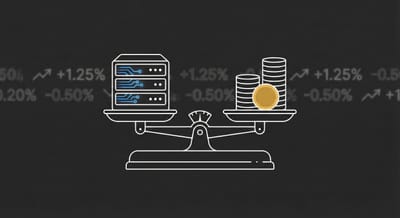
FinOps: The Unit Economics of Cloud
Your AWS bill isn't an IT expense; it's Cost of Goods Sold (COGS). How to shift from "Cost Cutting" to "Unit Economics" to improve Gross Margins.
The Hiring Bar: Why A-Players Hire A-Players (and B-Players Hire Disasters)
Once you hire a B-Player, the "Bozo Explosion" begins. How to maintain Talent Density using the "Bar Raiser" mechanism and the "Hell Yes" rule.
The P&L of a Feature: Stop Building "Squatter" Software
Code is a liability, not an asset. How to calculate the ROI of your engineering roadmap and why you should delete features that don't pay rent.