Lexicon: Verisimilitude
Why the search for a "perfect" strategy causes analysis paralysis. How Karl Popper's concept of Verisimilitude (truthlikeness) applies to Agile product development.
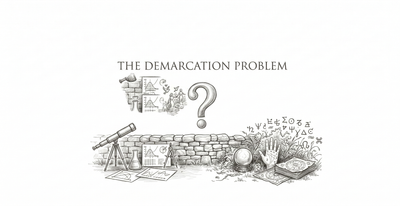
Lexicon: The Demarcation Problem
How do you tell the difference between a data-driven strategy and a consultant's horoscope? Karl Popper's "Demarcation Problem" is the ultimate BS-detector.
Lexicon: The Paradox of Tolerance
Why does a highly tolerant corporate culture require you to ruthlessly fire the "Brilliant Jerk"? Karl Popper's famous paradox explains the boundary of psychological safety.
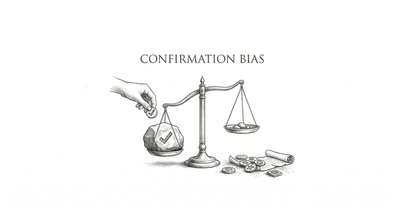
Lexicon: Confirmation Bias
Why the human brain is wired to ignore bad news. How the Chief Wise Officer overcomes Confirmation Bias to make objective, falsifiable decisions.
Bio: Karl Popper — The Black Swan Slayer
Why the corporate obsession with "confirming data" is destroying your strategy. How Karl Popper revolutionized science by teaching us to hunt for the Black Swan.
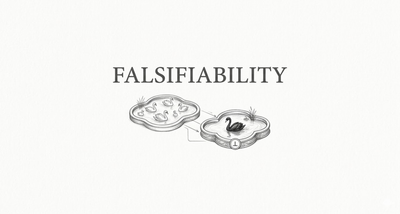
Lexicon: Falsifiability
If a strategy cannot be proven wrong, it is useless. How to use Karl Popper's concept of Falsifiability to stop funding bulletproof corporate nonsense.
Lexicon: Undecidability
Not all problems can be solved with "more data." How to recognize mathematically Undecidable problems in the boardroom and why they require judgment, not algorithms.
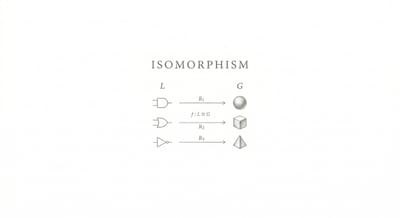
Lexicon: Isomorphism
What does a vinyl record have in common with your corporate dashboard? The mathematical concept of "Isomorphism" explains why no metric can perfectly capture reality.
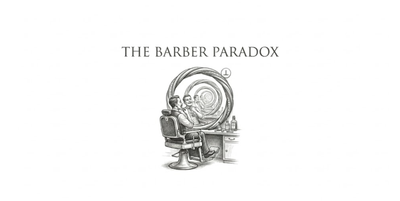
Lexicon: The Barber Paradox
What happens when a corporate policy contradicts itself? Bertrand Russell's famous "Barber Paradox" explains why bad rules create organizational paralysis.
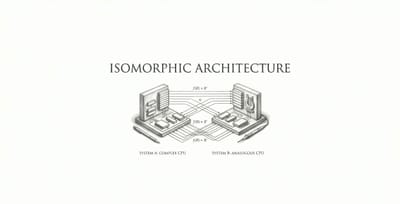
Lexicon: Isomorphic Architecture
Your software perfectly mirrors your org chart. How to use the "Inverse Conway Maneuver" to reverse-engineer your company for better product design.
Lexicon: Otium
The ancient Romans viewed "business" as a necessary evil to afford "leisure" (deep strategic thought). How modern leaders can reclaim their "Otium" to make better decisions.
Lexicon: Validity
"True" and "Valid" are not the same thing. Understanding the difference is the key to mastering Zero-Knowledge Proofs and effective delegation.
Lexicon: Superposition
A qubit is 0 and 1 at the same time. How the concept of "Superposition" explains quantum power and strategic ambiguity.
Lexicon: Aphasia
Aphasia isn't just a medical condition; in philosophy, it means "Non-Assertion." Why refusing to say "This is True" is a strategic superpower.
Lexicon: Isostheneia
Isostheneia means "Equal Strength." Why balancing your arguments is the best way to stop jumping to conclusions.
Lexicon: Epoché
Epoché is the "Suspension of Judgment." Why holding back your opinion is the fastest path to mental clarity.
Lexicon: Dogmatism
Dogmatism is the belief that the case is closed. In strategy, it is the refusal to investigate reality in favor of "Best Practices."
Lexicon: Skepsis
A Skeptic is not a Cynic. A Skeptic is an Investigator. Why leaders need more "Skepsis" (Inquiry) and less "Dogma."
Lexicon: Contingency
Why do successful companies suddenly collapse? Sartre's concept of "Contingency" explains that nothing in business is "necessary." It is all accidental.
Lexicon: The Look (Le Regard)
Why does a Performance Review feel so dehumanizing? Sartre's concept of "The Look" explains how being watched turns us from free humans into fixed objects.
Bad Faith and the Danger of "I Had No Choice"
"I'm just following orders." "The market made me do it." Sartre calls this Bad Faith. Why leaders must stop pretending they are victims of circumstance.
Lexicon: Facticity
You can't control the market or the economy. That is your "Facticity." But Sartre argues you can always control your response.
Lexicon: Existence Precedes Essence
The foundational rule of Existentialism. Why your "Brand Identity" means nothing if your actions don't match. Sartre's guide to corporate authenticity.
The Burden of Freedom: A Phenomenological Analysis of Jean-Paul Sartre
Jean-Paul Sartre’s philosophy offers a powerful framework for the modern "Chief Wise Officer." By rejecting the "Spirit of Seriousness" and embracing radical agency, leaders can build authentic, innovative cultures and drive meaningful change without excuses.
Lexicon: Simulation
Why do managers prefer spreadsheets to reality? The philosophical danger of "Simulation" and how to avoid the "Green Dashboard" fallacy.
Lexicon: Homo Faber
We are not "Man the Wise"; we are "Man the Maker." Bergson explains why our brains are hardwired to treat everything—including people—as tools to be used.
The Digital Twin of the Org: Simulating the Re-org Before You Fire
Stop guessing with your Org Chart. How "Digital Twins" allow you to simulate the chaos of a restructure in a sandbox before you inflict it on real people.
Lexicon: Dynamic Religion
The bureaucracy (Static) preserves the company, but only the mystic spark (Dynamic) can reinvent it. Bergson's guide to breaking the rules.
Lexicon: Static Religion
Why do innovative startups inevitably turn into boring bureaucracies? Bergson's concept of "Static Religion" explains the defensive mechanism of organizations.
Lexicon: Intuition (vs. Intellect)
It's not a gut feeling; it's a method. Bergson's "Intuition" is the ability to see the flow of reality, while "Intellect" only sees the snapshots.
Lexicon: Élan Vital
Why data can optimize, but only the "Vital Force" can innovate. Henri Bergson's concept of Élan Vital explained for business leaders.
The Architect of Duration: Henri Bergson’s Life, Philosophy, and Legacy
Before the Beatles, there was Bergson. From the "Bergsonism" mania of the 1900s to his historic debate with Einstein, this biography explores why the philosopher of "Duration" is the missing link for modern leadership and the age of AI.