
The Map is Not the Territory: High-Modernism & Leadership
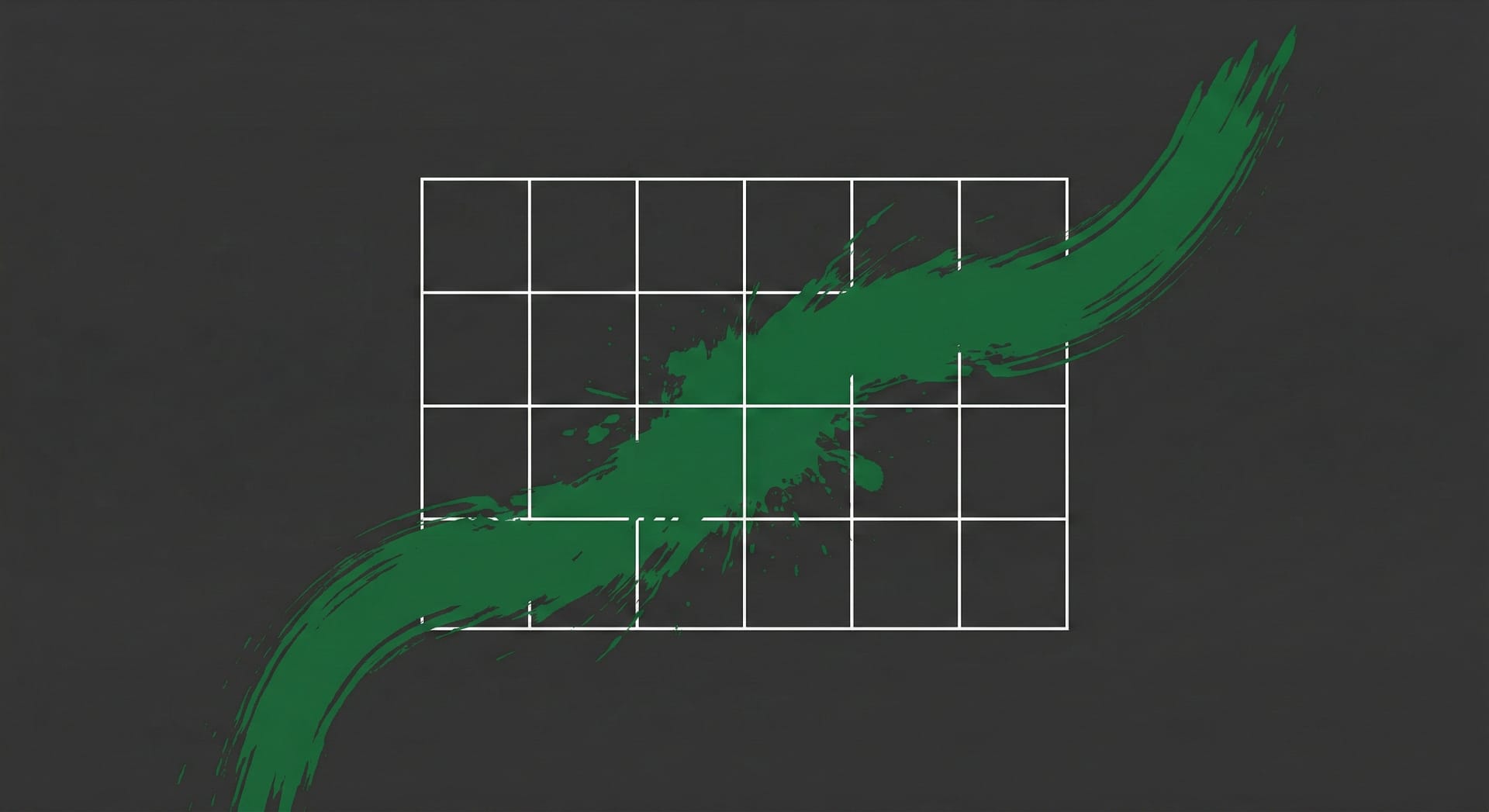
Every quarter, in boardrooms across the world, an executive looks at a dashboard full of green checkmarks, upward-trending charts, and perfectly aligned OKRs (Objectives and Key Results), and feels a profound sense of control.
Meanwhile, three floors down, the engineering team is burning out, customer service is fielding record complaints, and the core product is drowning in technical debt.
How can the metrics be so good when the reality is so bad?
Because the executive has fallen into the oldest trap in strategic leadership: They have confused the map with the territory.
Coined by the philosopher Alfred Korzybski in 1931, the phrase "The Map is Not the Territory" is a reminder that the models, spreadsheets, and dashboards we use to understand reality are not reality itself. They are abstractions. They are reductions. And when leaders start managing the abstraction instead of the reality, they destroy the very organizations they are trying to lead.
The Pathology of High-Modernism
To understand why smart leaders fall in love with their maps, we must look at a concept called Authoritarian High-Modernism, popularized by political scientist James C. Scott in his brilliant book, Seeing Like a State.
Scott studied why massive, well-intentioned state planning projects, like creating new agricultural systems or building master-planned cities, almost always ended in catastrophic failure.
He found that administrators hate complex, organic systems because they are "illegible." You cannot easily measure a wild forest. It is messy. There is underbrush, random spacing, and an unpredictable ecosystem. So, the administrators tried to make the forest "legible." They cut down the wild forest and planted identical trees in perfect, straight rows. They created a "Scientific Forest."
On the administrator's map, it looked beautiful. It was perfectly quantifiable. But in reality, the scientific forest died. By removing the messy underbrush, they destroyed the soil ecology and the habitats for birds that ate the insects. A few years later, the perfect rows of trees were wiped out by disease.
The administrators killed the territory to make the map look good.
The "Scientific Forest" of Corporate Management
Corporate leadership is deeply infected with High-Modernism. We crave legibility. We want to take the messy, organic reality of human collaboration and force it into a perfect grid.
We do this through rigid KPIs, hyper-detailed Jira workflows, stack-ranking performance reviews, and standardized time-tracking. We tell ourselves we are creating efficiency. But what we are really doing is clear-cutting the underbrush.
- The Jira Trap: A software team is forced to break every task into 2-hour perfectly estimable chunks so the project manager’s Gantt chart looks clean. The engineers stop doing deep, exploratory architectural work (the messy underbrush) because it doesn't fit neatly into a ticket. The chart looks green, but the codebase rots.
- The Sales Metric Trap: We measure sales reps strictly by outbound call volume. The map (CRM dashboard) shows record-breaking activity. The territory (the customer base) is alienated and annoyed by the relentless, low-quality spam.
When you manage strictly by the map, you trigger Goodhart's Law: When a measure becomes a target, it ceases to be a good measure. Your team will optimize for the green checkmark, even if it means burning down the forest to get it.
The CWO Strategy: Getting Mud on Your Boots
The Chief Wise Officer knows that dashboards are necessary, but they are dangerous if consumed in isolation. You must build a culture that actively resists the seduction of the map.
1. Practice Genchi Genbutsu (Go and See) In the Toyota Production System, there is a core principle called Genchi Genbutsu, which translates to "Go and see for yourself." When a metric looks wrong (or surprisingly right), you do not ask for another report. You walk onto the factory floor. You sit in on the customer support calls. You pair-program with the junior engineer. You must constantly calibrate the map against the raw, unmeasured territory.
2. Audit Your "Legibility Tax" How much time does your team spend simply updating the map for leadership? If your engineers are spending four hours a week updating tracking software so the VP can have a pretty dashboard, you are charging a massive "Legibility Tax." Great leaders accept a certain amount of illegibility. They trust the organic competence of the team more than the precise geometry of the reporting tool.
3. Keep the Map Sketchy A highly detailed map gives a false sense of certainty. If a financial model predicts revenue three years out to the exact decimal point, it is lying. The Wise Officer prefers "sketchy" maps, heuristics, directional goals, and broad guardrails. A sketch acknowledges its own limitations. It leaves room for the people on the ground to navigate the unexpected terrain.
Conclusion: The Epistemic Arrogance of the Spreadsheet
The spreadsheet is one of the most powerful tools ever invented, but it breeds Epistemic Arrogance, the belief that if something cannot be quantified, it does not exist.
Morale, trust, brand resonance, and psychological safety cannot be neatly graphed. They are the underbrush of your company. If you optimize only for the metrics you can measure, you will systematically destroy the invisible elements that keep the ecosystem alive.
The map is a guide, not a gospel. Respect the metrics, but revere the territory.
No spam, no sharing to third party. Only you and me.


Member discussion