
Rhizome (Decentralized Network)
The Origin
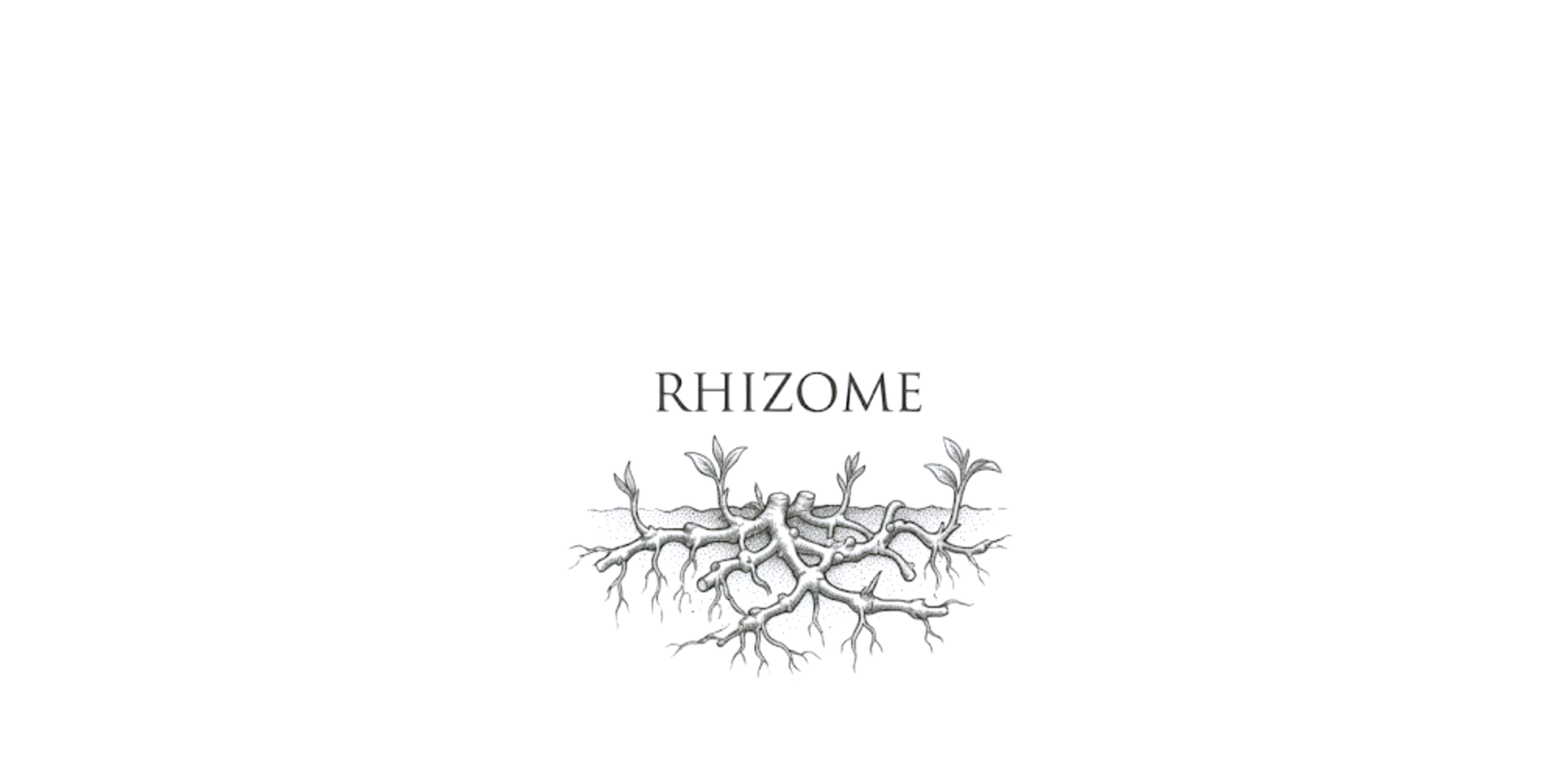
The term borrows from the botanical classification of a subterranean plant stem that sends out roots and shoots from its nodes. It was rigorously adapted into post-structuralist philosophy by Gilles Deleuze and Félix Guattari in their seminal 1980 text, A Thousand Plateaus. They used the concept to dismantle traditional, hierarchical models of knowledge and organization.
The Definition
In Deleuzo-Guattarian philosophy, the rhizome is a decentralized, non-hierarchical network characterized by multiplicity and continuous growth. It stands in direct structural opposition to an "arborescent" (tree-like) system, which relies on a central trunk and a linear, top-down chain of command. A rhizome possesses no center and no definitive boundary; any node can connect to any other node, and if a segment breaks, the network frequently regenerates along a new line of flight.
The Corporate Application
The traditional enterprise data warehouse operates as a strict arborescent structure. In this model, centralized Data Engineering teams—heavily incentivized by pipeline stability, cost containment, and rigorous governance—act as the sole gatekeepers of organizational intelligence. This hierarchical power structure frequently creates severe operational bottlenecks. Product managers and business analysts, motivated by rapid feature deployment and localized market analytics, often find themselves stalled in a centralized IT queue. When the analytical demands of the enterprise scale beyond the processing capacity of the central trunk, this monolithic system tends to fracture under its own administrative weight.
Applying a post-structuralist lens to this challenge yields the architectural blueprint for the modern data mesh. By designing the enterprise data platform as a rhizome, executives actively dismantle the centralized power structure, distributing data ownership to decentralized, domain-specific nodes. A localized marketing analytics node connects directly to a supply chain telemetry node without routing requests through a central authority. While traditional IT leaders might fear the perceived loss of administrative control, a rhizomatic architecture probabilistically increases enterprise resilience. It shifts the C-suite mandate from maintaining monolithic control to facilitating decentralized interoperability, allowing the organizational network to scale organically and adapt to highly localized market friction.
The CWO's Rule
"Centralized data monopolies eventually choke operational velocity. A resilient enterprise architecture must operate as a rhizome: a decentralized multiplicity where any node can connect, scale, and function without waiting for permission from a hierarchical trunk."
No spam, no sharing to third party. Only you and me.




Member discussion