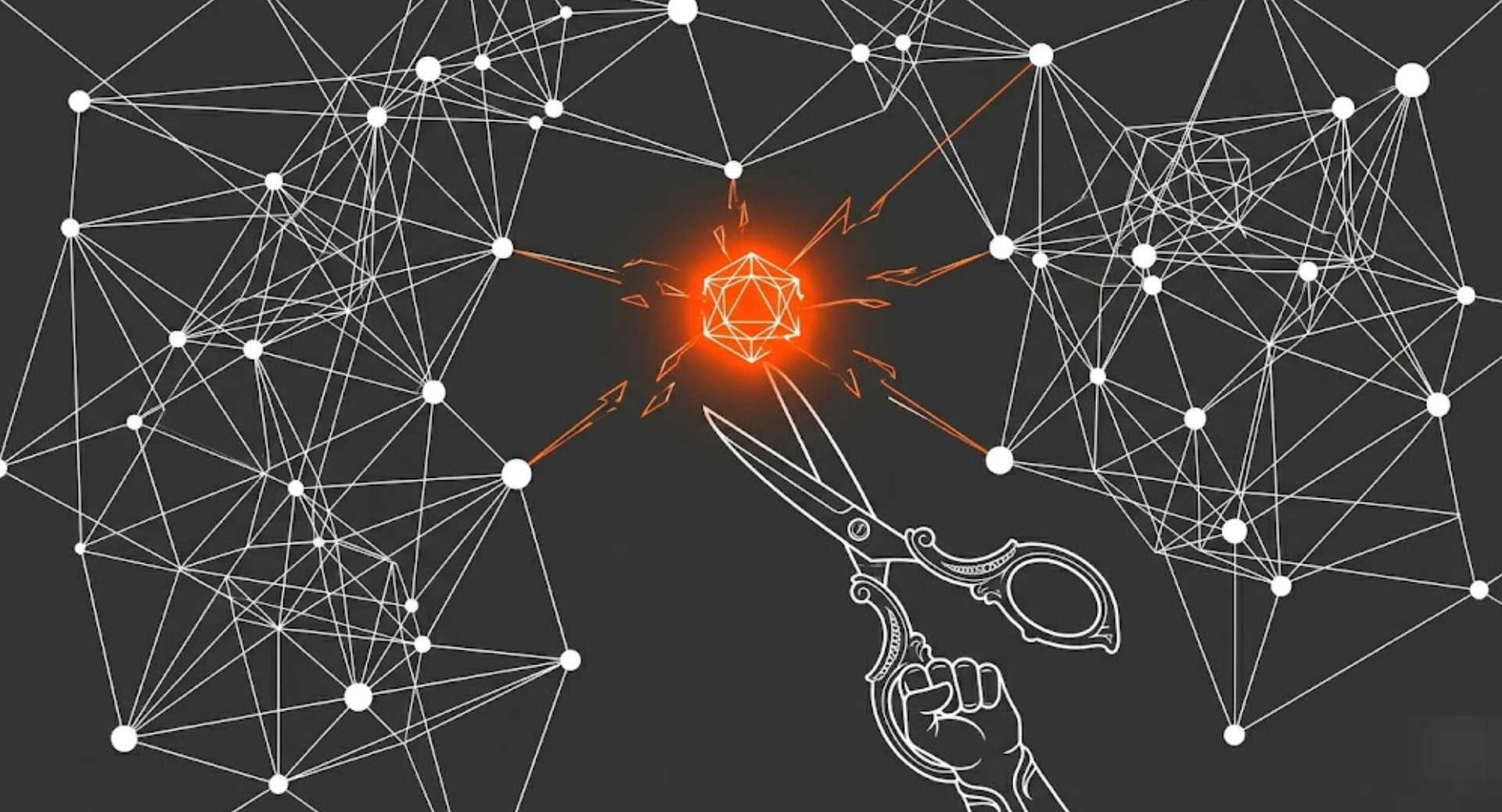
The Iron Fist: Machiavellian Surgery on the Toxic 10x Asset
The High-Performance Contagion
Within high-growth environments, specifically those emerging from early-stage volatility into the structured demands of Enterprise IT, a recurring systemic friction arises: the "Crucial Outlier." This is typically an individual within Engineering or Product Management who possesses deep, un-documented tribal knowledge and a high-velocity output, the so-called "10x founder" archetype, but whose interpersonal behavior creates severe operational drag.
Probabilistically, the technical gains provided by such an asset are eventually offset by the degradation of the wider system. As the outlier bypasses established protocols and ignores the structural needs of Operations or Quality Assurance, the surrounding team often experiences a decline in psychological safety, leading to the attrition of mid-tier talent and a thinning of the institutional "bench." The friction is not a matter of personality, but of a singular node in the network becoming so "heavy" that it threatens the structural integrity of the entire grid.
The Prince’s Necessary Cruelty
To analyze the systemic necessity of removing a high-performing toxic asset, we look to Niccolò Machiavelli’s discourse on the management of internal threats in The Prince (1513). Machiavelli famously addresses the balance between "the velvet glove" and "the iron fist," specifically exploring whether it is better to be loved or feared.
His conclusion is rooted in systemic stability: "A prince must not mind the reproach of cruelty; because with a few examples he will be more merciful than those who, through too much mercy, allow disorders to arise." In a modern enterprise, "mercy" toward a toxic high-performer is, in fact, a cruelty toward Engineering and Product Management as a whole. By permitting one node to violate the system's governing principles (OKRs, code standards, or behavioral norms), the organization effectively signals that its rules are arbitrary, leading to a breakdown in total system discipline.
The Calculus of the Critical Node
When deciding whether to excise a high-performing but toxic asset, the enterprise typically weighs three competing systemic realities:
- The Technical Dependency (Engineering): There is often a rational fear that removing the "10x" asset will result in catastrophic system failure or the loss of un-recoverable knowledge. This mindset prioritizes immediate uptime over long-term architectural health.
- The Cultural ROI (HR/Operations): From this perspective, the "cost" of the individual is measured in the turnover rates of surrounding staff and the legal risks of a hostile work environment. The logic here is utilitarian: the health of the many outweighs the output of the one.
- The Strategic Continuity (Product Management): There is a concern that losing a key visionary will stall the roadmap. However, this often overlooks the fact that a "visionary" who refuses to collaborate becomes a bottleneck that prevents the scaling of that very roadmap.
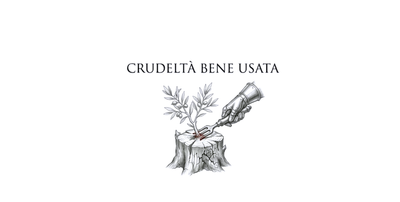
Machiavelli would argue that the "cruelty" of a swift termination is a "well-used" cruelty (Chapter VIII, The Prince). A well-used cruelty is one that is executed once, decisively, for the sake of security, and then replaced by benefits for the remaining subjects. In contrast, "ill-used" cruelty is the slow, agonizing process of performance improvement plans (PIPs) and endless mediation that keeps the organization in a state of perpetual tension.
The Architecture of the Clean Break
To transition from a dependency on a toxic asset to a resilient, distributed system, the enterprise must move beyond individual performance metrics and toward systemic durability.
- Knowledge Decoupling (The Archive Strategy): Before the "Iron Fist" is applied, Engineering must mandate a "Knowledge Redundancy" phase. This isn't framed as an exit strategy, but as a standard operational requirement for all "High-Impact Assets." If a system cannot survive the absence of one person, the system is already broken; the termination merely makes that breakage visible.
- The Surgical Strike (Decisive Severance): Machiavelli suggests that "injuries ought to be done all at one time, so that, being tasted less, they offend less." The removal of a toxic founder-type should be instantaneous and total. Prolonged transitions allow the toxicity to metastasize into factionalism within Sales or Engineering.
- The Cultural Jubilee (Systemic Re-calibration): Following the removal, the organization must immediately deploy "the velvet glove." This involves a rapid reinvestment in the remaining team, clarifying that the removal was a defense of the collective system, not an act of individual malice. This is the moment to reset the "Social Contract" within Product Management and Operations.
The Sovereign Duty to the Whole
The survival of the enterprise depends on the realization that no single asset is more valuable than the integrity of the system itself. A high-performer who destroys the environment around them is not an asset; they are a sophisticated form of technical and cultural debt. The "Iron Fist" is not an act of anger, but a cold, Machiavellian calculation to ensure the state, the company, endures.
"And here it is to be noted that men should either be caressed or eliminated; because they avenge themselves of slight grievances, but of serious ones they cannot." — Niccolò Machiavelli, The Prince, Chapter III.
The Outlier De-risking Checklist
This toolkit is designed for HR and Engineering to evaluate the systemic impact of a "Critical Node" and prepare for a potential severance that minimizes operational shock.
Evaluation: The Toxicity vs. Utility Matrix
| Metric | The 10x Asset Score (1-10) | Team Impact Score (1-10) | Systemic Risk Rating |
| Output Velocity | How much code/revenue do they generate? | Does their speed create "re-work" for others? | High (Speed > Quality) |
| Knowledge Siloing | Are they the only person who understands Core X? | Is the team afraid to touch Core X? | Critical (Single Point of Failure) |
| Attrition Correlation | What is the turnover rate in their direct orbit? | Are high-potentials leaving because of this node? | Severe (Talent Drain) |
| Protocol Adherence | Do they follow the CI/CD and Documentation rules? | Does their non-compliance set a precedent for others? | Moderate (Process Decay) |
The "Clean Break" Protocol
- The Silent Audit: Engineering conducts a 14-day code review and documentation gap analysis to identify exactly what knowledge is trapped in the outlier node.
- The Severance Package (The Caress): Provide a generous financial exit. As Machiavelli noted, you either eliminate the threat or treat them so well they have no reason to strike back. A "bitter" founder with a grievance is a security risk.
- The Post-Mortem Town Hall: Address Engineering and Product immediately. Do not disparage the individual, but explicitly state that the "Systemic Health" of the team is the non-negotiable priority.
No spam, no sharing to third party. Only you and me.


Member discussion