
Niccolò Machiavelli: The Theoretical Foundations of Political Realism and Their Modern Resonances
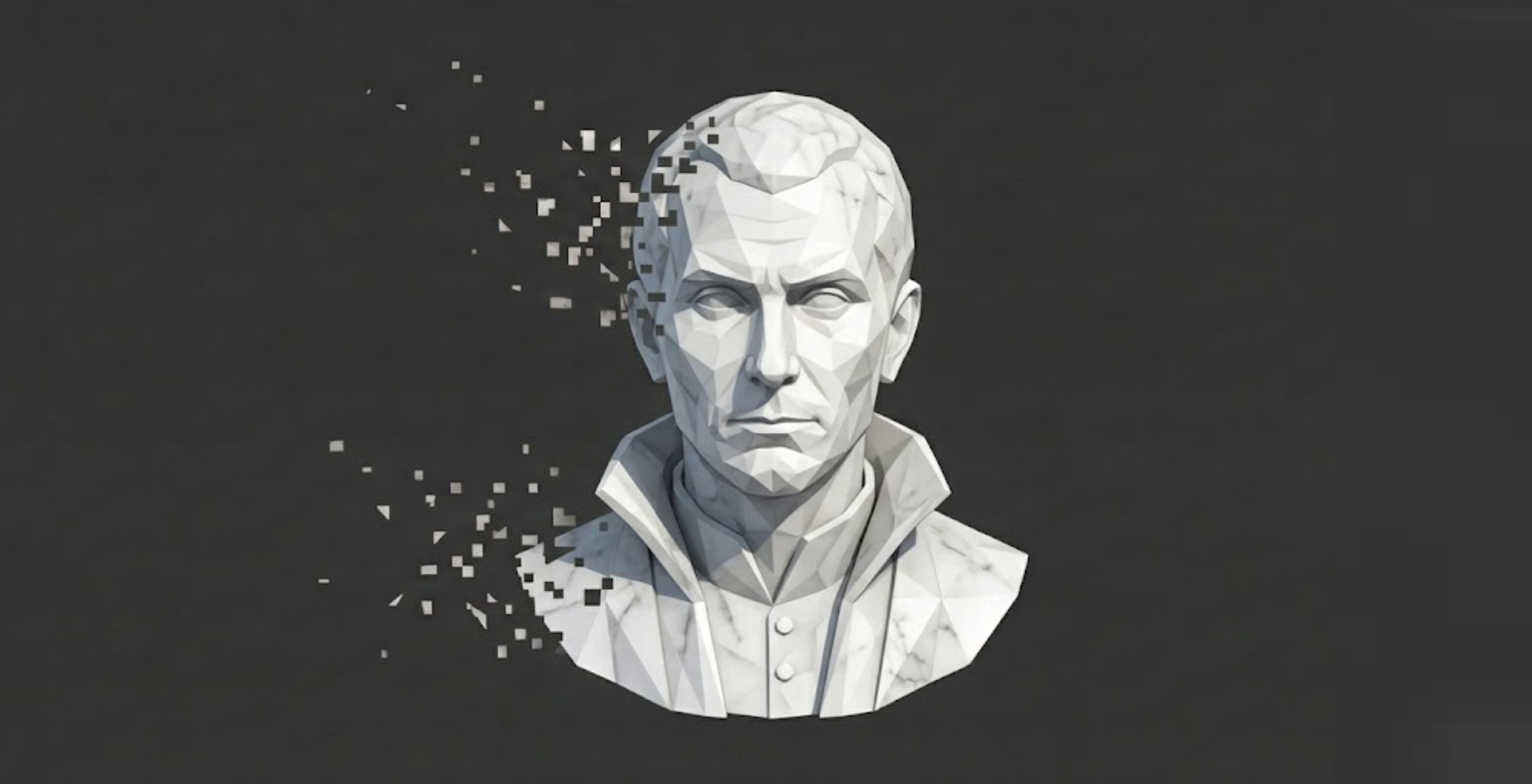
The intellectual legacy of Niccolò Machiavelli (1469–1527) represents one of the most significant ruptures in the history of Western political thought. Often characterized as the father of modern political science, Machiavelli transitioned the study of governance from the normative, idealistic "imagined republics" of classical and medieval philosophy to a rigorous, empirical analysis of the verità effettuale, the effectual truth of the matter. His work emerged from the volatile crucible of the Italian Renaissance, a period defined by the collapse of traditional feudal orders, the rise of the city-state, and the constant threat of foreign intervention. By prioritizing the acquisition and maintenance of power over abstract moral virtues, Machiavelli inaugurated a realist paradigm that continues to inform not only contemporary geopolitics but also modern organizational management, human resources, and technical strategy.
The Crucible of Renaissance Florence: Early Life and Political Context
Niccolò Machiavelli was born on May 3, 1469, in Florence, during an era of unprecedented cultural flowering and political instability. He grew up in the Santo Spirito district, the son of Bernardo Machiavelli, a doctor of law with a deep appreciation for classical literature. Bernardo’s library provided the young Niccolò with a foundational education in the humanities, exposing him to the works of Cicero, Lucretius, and the Roman historians at a formative age. By the age of seven, Machiavelli had begun studying Latin, and by twelve, he was already proficient in translating classical texts. This immersion in the studia humanitatis was academic and it provided him also with the analytical tools to compare the failures of contemporary Italy with the perceived strength and stability of the ancient Roman Republic.
The political environment of Machiavelli’s youth was dominated by the Medici family, who exercised de facto control over the Florentine Republic. However, this stability was shattered in 1494 when Charles VIII of France invaded Italy, leading to the expulsion of the Medici and the rise of the Dominican friar Girolamo Savonarola. Machiavelli observed Savonarola’s theocratic experiments with a mixture of fascination and skepticism. He recognized that while Savonarola possessed the charisma to mobilize the masses, he was an "unarmed prophet" who lacked the coercive power necessary to sustain his regime against external pressure and internal dissent. Savonarola’s execution in 1498 served as a definitive lesson for Machiavelli: that religious or moral authority, absent the foundation of "good arms," is inevitably fleeting.
The Diplomatic Master: The Chancery Years (1498–1512)
Following the fall of Savonarola, Machiavelli was appointed as the head of the Second Chancery of the Florentine Republic at the age of twenty-nine. This position, which he held for fourteen years, placed him at the center of the Republic’s administrative and diplomatic machinery. As Secretary to the "Ten of War," Machiavelli was responsible for the production of official correspondence, the oversight of subject territories, and the execution of high-stakes diplomatic missions to the courts of Europe.
Machiavelli’s diplomatic career was a live-action study in power politics. He conducted over forty missions, interacting with the most influential figures of the day, including King Louis XII of France, Pope Julius II, and the Holy Roman Emperor Maximilian I. However, no figure left a more profound impression on him than Cesare Borgia, the son of Pope Alexander VI. During his mission to Borgia’s court in 1502, Machiavelli witnessed the Duke’s ruthless consolidation of the Romagna region. He observed how Borgia used a combination of tactical brilliance, systemic deception, and calculated violence to pacify a chaotic and rebellious territory. Borgia’s use of his minister Ramiro d'Orco as a scapegoat, executing him in the town square of Cesena to both satisfy and stupefy the populace, provided Machiavelli with a visceral example of the strategic use of cruelty and the orchestration of public perception.
During his tenure, Machiavelli also recognized the inherent weakness of the Italian states: their reliance on mercenary forces, or condottieri. He argued that mercenaries were "useless and dangerous" because they were motivated only by profit, making them cowardly in battle and treacherous in peace. In 1506, he successfully persuaded the Florentine government to establish a native militia, the ordinanze, composed of citizen-soldiers who were personally invested in the Republic’s survival. This experiment saw early success with the capture of Pisa in 1509, but it ultimately failed to withstand the professional Spanish forces that returned the Medici to power in 1512.
The Descent into Silence: Torture and Exile
The restoration of the Medici in 1512 marked the abrupt termination of Machiavelli’s professional life. Accused of participating in a conspiracy against the new regime, he was arrested and subjected to the tratto di corda, or strappado. This method of torture involved hoisting the prisoner by their bound arms and dropping them repeatedly, causing severe dislocation of the shoulders. Machiavelli endured six "drops" without confessing, eventually being released under a general amnesty following the election of Giovanni de' Medici as Pope Leo X in 1513.
Exiled to his family farm in Sant'Andrea in Percussina, Machiavelli fell into a period of deep depression and intellectual ferment. He famously described his life in a letter to Francesco Vettori, dated December 10, 1513, as one of crushing banality during the day, engaging in petty disputes at the local inn and snaring thrushes, contrasted with a ritualistic intellectual life at night. He wrote that upon returning home, he would strip off his mud-covered clothes and put on "garments regal and courtly" to commune with the thinkers of antiquity. It was in this state of internal exile that he composed his most famous works, The Prince and the Discourses on Livy, as a desperate attempt to prove his utility to the Medici and to diagnose the pathologies of the Italian political state.
The Anatomy of Power: Analyzing The Prince
The Prince remains the most controversial and widely read treatise in the history of political thought. Written as a guide for a "new prince" who must establish control over a newly acquired state, the work is a sustained critique of the classical view that a ruler’s authority is derived from their moral virtue. Machiavelli argues that in the realm of politics, "power and authority are coequal," and that the successful ruler must prioritize the "effectual truth" over idealistic visions of how men ought to live.
The Dichotomy of Virtù and Fortuna
Central to Machiavelli’s analysis is the interplay between virtù and fortuna. In the Machiavellian sense, virtù is not Christian morality; it is the set of qualities, shrewdness, flexibility, boldness, and foresight, that enable a leader to master their circumstances. Fortuna, by contrast, represents the unpredictable and often destructive force of chance or historical contingency.
Machiavelli compares fortuna to a violent river that can flood and destroy buildings; while the river’s rage cannot be predicted, a ruler of virtù builds dams and dikes during times of peace to mitigate the damage. He argues that because the world is in a state of constant flux, a leader must be prepared to "change their nature" to suit the times. This requirement for flexibility is what separates the successful prince from the one who fails by adhering to a single, rigid mode of behavior.
The Ethics of Practicality: Fear and Love
In one of the book’s most famous passages, Machiavelli asks whether it is better for a prince to be loved or feared. He concludes that while it is desirable to be both, it is "much safer to be feared than loved" if one must choose. This conclusion is based on his realist assessment of human nature: men are generally "ungrateful, fickle, liars and deceivers" who will abandon a leader they love when self-interest dictates, but who are held in check by the "dread of punishment" that fear provides.
Crucially, Machiavelli distinguishes between being feared and being hated. A prince should avoid hatred by refraining from seizing the property and women of his subjects, as hatred is the primary driver of conspiracy and rebellion. He also introduces the concept of the "well-used" cruelty, suggesting that a leader should commit necessary acts of violence swiftly and at the beginning of their rule to establish order, rather than allowing a state of chaos to necessitate ongoing and increasing brutality.
The Republican Vision: Discourses on Livy
While The Prince focuses on the autocrat, the Discourses on Livy (written circa 1513–1517) explores the dynamics of republican government. In this work, Machiavelli argues that a republic is inherently more stable and lasting than a principality because it can better adapt to changing circumstances by drawing on the diverse temperaments of its citizens.
The Theory of Social Humors (Umori)
One of Machiavelli’s most profound contributions to political sociology is his theory of umori, or social humors, which he adapted from classical medical theory. He posits that every city contains two primary, opposing appetites: the populo (the people), who desire not to be dominated or oppressed, and the grandi (the great/elite), who desire to dominate and oppress the people.
Unlike many thinkers who viewed social conflict as a sign of decay, Machiavelli argues that the friction between these two groups is the very engine of liberty. In ancient Rome, the tension between the Senate and the Plebeians led to the creation of the Tribunes and laws that protected the common good. A healthy republic does not seek to eliminate one side but rather to create institutions that channel this natural conflict into productive civic life. When these humors become unbalanced, either through the unchecked ambition of the grandi or the corruption of the populo, the state descends into licenzia (anarchy) or tyranny.
Civic Virtue and Necessity
The survival of a republic depends on civic virtù, or the willingness of citizens to place the interests of the state above their private desires. Machiavelli notes that people are naturally prone to corruption, particularly in times of peace and luxury. He argues that a republic must periodically be "brought back to its beginnings" through the force of necessity or the intervention of a charismatic leader who can restore the original discipline and fear of the law. This orientation toward necessity, the idea that survival justifies "extraordinary means" such as violence, is a recurring theme that bridges his thought on both principalities and republics.
The Military Science of Machiavelli
In The Art of War (1521), Machiavelli explicitly links the survival of the state to the quality of its military institutions. He believed that war was not a separate domain from politics but was "a disparate patchwork of practices, routines, and disciplines" that reflected the innermost values of a society.
He was a staunch advocate for the infantry over the cavalry, arguing that the disciplined pike phalanx, modeled after the ancient Romans and contemporary Swiss, was the superior force on the battlefield. More importantly, he argued that the army should be a school for citizenship. By serving in the militia, citizens would develop the virtù necessary to maintain the republic's liberty. This rejection of mercenaries and the call for a "mixed army" composed of one’s own subjects was a direct response to the political leverage that condottieri often wielded against their employers, frequently betraying them or seizing power for themselves.
The Historian and the Problem of Factionalism
In his later years, Machiavelli was commissioned by the Medici (specifically Cardinal Giulio de' Medici, later Pope Clement VII) to write the Florentine Histories. This work provided him with the opportunity to apply his theoretical framework to the actual history of his native city. He diagnosed Florence’s primary pathology as its persistent and destructive internal divisions.
Unlike the divisions in Rome, which Machiavelli viewed as productive of liberty, the factionalism in Florence was rooted in private interests and family rivalries rather than the broad classes of the populo and the grandi. This led to a state of perpetual instability where the city remained weak and dependent on foreign powers. His analysis of the Casa di San Giorgio in Genoa, a private financial entity that effectively managed the state’s territories, was one of the earliest examinations of the intersection between financial and territorial power in the early modern era.
Modern Resonances: Machiavelli in the 21st Century
The "Machiavellian" label is frequently used as a pejorative in modern psychological and political discourse, particularly in relation to the "Dark Triad" of personality traits (Machiavellianism, narcissism, and psychopathy). However, a more nuanced reading of Machiavelli’s work reveals its profound utility as a framework for strategic management, organizational dynamics, and technical leadership in the digital age.
Organizational Humors and Leadership
In the corporate world, the Machiavellian theory of umori can be applied to the management of diverse stakeholders. A Chief Human Resources Officer (CHRO) or CEO must balance the competing "humors" within an organization: the executive leadership (the grandi), who desire growth and control, and the workforce (the populo), who desire security, fair treatment, and autonomy.
Machiavelli’s advice on fear and love is often reinterpreted as a balance between authority and empathy. Modern research suggests that "High-Mach" individuals in the workplace are often successful not because they are cruel, but because they are strategically intelligent, adept at reading emotional cues, and capable of regulating their own responses to navigate complex political environments. They are able to build alliances and access resources by "sucking up" or managing their relationships with superiors effectively, viewing potential enemies not as obstacles but as "enhancers" who can be utilized for personal or organizational gain.
The Realism of Technical Debt
The concept of "technical debt" in software engineering and product management offers a striking parallel to Machiavelli’s concept of necessity and the trade-offs of power. Technical debt is incurred when a team chooses an expedient, "quick and dirty" solution in the short term to meet a deadline or launch a product, with the understanding that it will require more work (interest payments) later.
From a Machiavellian perspective, technical debt is an application of verità effettuale. A product manager must often choose between an ideal, perfectly architected solution (the "imagined republic") and a compromised version that allows the company to survive a competitive threat or reach a market milestone (the "effectual truth").
The "Technical Debt Onion Model" suggests that these decisions are not merely technical but are rooted in individual cognitive biases and organizational systems. Effective management of technical debt requires the Machiavellian virtù of foresight, building "floodgates and embankments" (such as automated testing and platform engineering) during quiet periods to prevent the eventual "river" of system failure when the product scales.
Geopolitical Realism and Crisis Management
In the arena of international relations, Machiavelli remains the preeminent theorist of realism. Modern strategies such as nuclear deterrence and Mutually Assured Destruction (MAD) are quintessentially Machiavellian: they prioritize effectiveness and stability (preventing annihilation) over conventional morality. The practice of economic statecraft, such as China’s Belt and Road Initiative, reflects Machiavelli’s insight that strategic generosity can be used to build dependent relationships that serve the donor’s long-term interests.
Crisis management particularly reveals Machiavellian dynamics. During the 2008 financial crisis or modern security emergencies, executive branches often suspend normal market principles or constitutional norms to prevent systemic collapse, echoing Machiavelli’s belief that in times of extreme necessity, the leader must be prepared to "enter into evil" to preserve the common good. Intelligence operations, from traditional espionage to cyber warfare, operate in a realm where deception is not only a tactic but an essential requirement for national survival.
The Ethics of "Dirty Hands": A Final Synthesis
The enduring controversy surrounding Machiavelli stems from his articulation of the "problem of dirty hands", the tragic reality that politicians and leaders must sometimes commit morally repugnant acts to prevent even greater evils. This perspective does not suggest that Machiavelli was amoral; rather, he defended a different morality based on civic virtue and the survival of the political organism.
His work challenges the reader to confront the world as it is, rather than as we wish it to be. By stripping away the comfort of "imagined republics," Machiavelli forces an engagement with the causal mechanisms of history and the fluid, dynamic nature of power. Whether in the context of a Renaissance city-state, a modern corporation, or a global superpower, his emphasis on virtù, necessità, and the verità effettuale provides a clear-eyed methodology for navigating the inherent complexity and corruption of human affairs. Machiavelli’s "The Realist" remains a vital, if unsettling, guide for any practitioner of power who seeks to build stability in an unpredictable world.
No spam, no sharing to third party. Only you and me.


Member discussion