
Lexicon: Verisimilitude
The Origin
A central concept in the philosophy of science, heavily developed by Karl Popper. Derived from Latin, meaning "truthlikeness" or "nearness to the truth."
The Definition
Verisimilitude is the idea that while we may never achieve absolute, perfect, undeniable truth, we can measure how closely a theory approximates the truth.
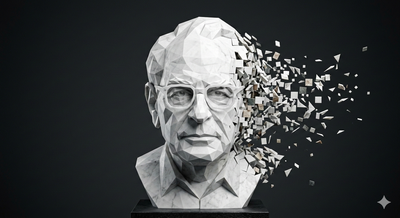
Popper argued that science doesn't jump from "False" to "100% True." Instead, it progresses by replacing old theories with new theories that have higher verisimilitude. For example, Isaac Newton's laws of physics were eventually proven technically "false" at a cosmic scale by Albert Einstein. But Newton wasn't entirely wrong; his theory just had lower verisimilitude than Einstein's. Newton's map was good; Einstein's map was simply closer to the actual territory.
The Corporate Application
In the corporate world, executives are often paralyzed by the search for the "perfect" strategy or the "flawless" product release.
1. The Agile Approximation The Chief Wise Officer understands that absolute perfection in a complex market is a myth. When a team pitches a new product feature, do not ask, "Is this the absolute best solution?" Ask, "Does this have higher verisimilitude than what we currently have in production?" If the new feature is closer to solving the customer's problem than the old feature, you ship it.
2. Ending Analysis Paralysis Strategy is not about finding the ultimate truth; it is about iterative approximation. You launch a hypothesis, the market proves parts of it wrong, and you release a new version with higher verisimilitude.
The Chief Wise Officer's Rule: Stop waiting for perfect data. If the new strategic model is less wrong than the old strategic model, execute it. Progress is just a relentless, iterative march toward higher verisimilitude.
No spam, no sharing to third party. Only you and me.
Member discussion