
Lexicon: Undecidability
The Origin
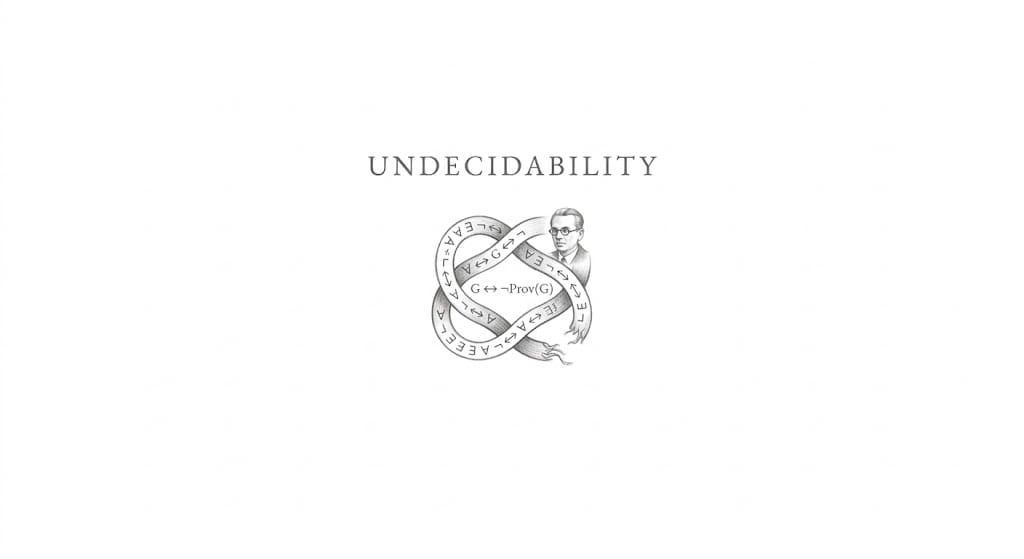
In formal logic and computability theory, Undecidability was proven in the 1930s by mathematicians like Kurt Gödel and Alan Turing. It shattered the assumption that mathematics could eventually solve everything.
The Definition
An Undecidable Problem is a specific type of question for which it is mathematically impossible to construct an algorithm that will always provide a correct "Yes" or "No" answer.
It doesn't mean the answer is just "really hard to figure out" or that "we don't have enough computing power yet." It means the structure of the problem defies absolute algorithmic resolution. You cannot compute your way out of it.
The Corporate Application
Modern business is obsessed with being "Data-Driven." We want an algorithm or a dashboard to give us a definitive "Yes/No" for every strategic choice. But the Chief Wise Officer knows that the highest-stakes decisions in business are structurally Undecidable.
1. The Analytics Trap You can use data to decide if a button should be blue or green (A/B testing). That is a decidable problem. But if you ask: "Will acquiring this startup destroy our internal culture?" or "Will pivoting to this new market render our core brand obsolete in ten years?", these are Undecidable. When executives face Undecidable problems, they often freeze. They demand their teams gather "more data" or build "better models." This is a waste of time. No algorithm can output a definitive "Yes" on the future of human culture.
2. Heuristics over Algorithms How do you solve a problem that cannot be computed? You use Heuristics (rules of thumb based on experience) and Judgment. When data fails, principles take over. You stop asking, "What does the spreadsheet predict?" and start asking, "Does this align with our core strategic identity?"
The Chief Wise Officer's Rule: Your algorithms are for your decidable problems (supply chain routing, ad spend optimization). Your salary is for the Undecidable ones. Stop waiting for the math to give you permission to lead.
No spam, no sharing to third party. Only you and me.

Member discussion