
Lexicon: The Paradox of Tolerance
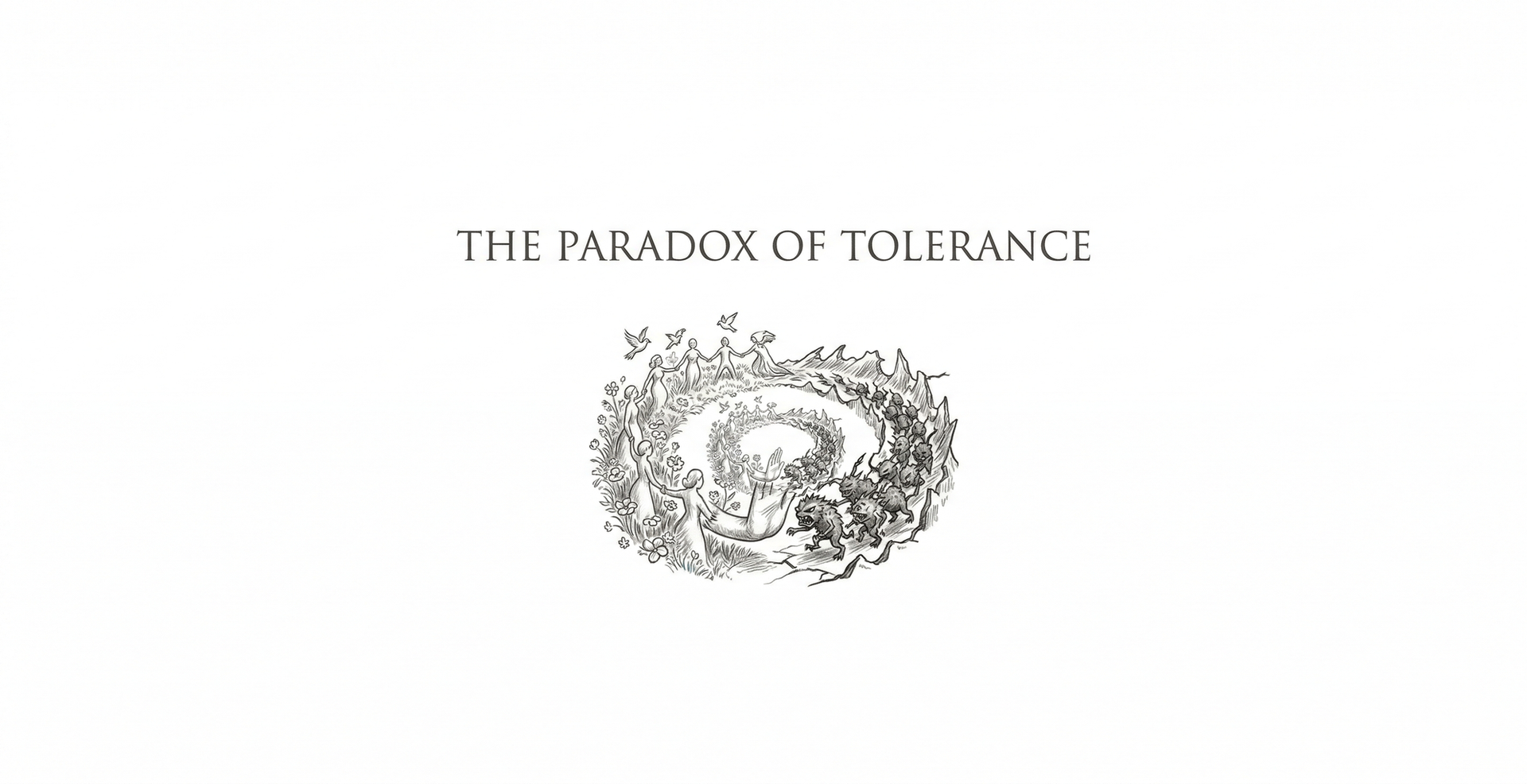
The Origin
Formulated by philosopher Karl Popper in his 1945 book, The Open Society and Its Enemies. Popper was wrestling with how democratic, open societies could defend themselves against totalitarian ideologies that used the rules of democracy to destroy it.
The Definition
The Paradox of Tolerance states that if a society is tolerant without limit, its ability to be tolerant will eventually be seized or destroyed by the intolerant.
Therefore, to maintain a tolerant society, the society must retain the right to be highly intolerant of intolerance.
It is a paradox because it requires violating your own primary rule (tolerance) in order to protect it. Popper clarified that you do not suppress intolerant ideas (you debate them), but you must actively suppress intolerant actions and behaviors that refuse rational debate and resort to violence or intimidation.
The Corporate Application
In corporate culture, "tolerance" is usually framed as Psychological Safety, the belief that you will not be punished for making a mistake, asking a "stupid" question, or pitching a wild idea.
1. The Tolerance Trap Weak leaders misunderstand psychological safety. They think it means they must tolerate everything, including toxic behavior, bullying, and the "Brilliant Jerk" who berates junior staff but hits their sales quota. They tell themselves, "We have a tolerant culture, so we have to accept different personalities."
2. The Strategic Boundary The Chief Wise Officer understands the paradox: If you tolerate the bully, the psychological safety of the entire team collapses. The rest of the team will stop speaking up, stop innovating, and eventually quit. By tolerating the intolerant employee, you have destroyed the tolerant culture.
The Chief Wise Officer's Rule: You must have infinite tolerance for failed experiments, dissenting opinions, and honest mistakes. You must have zero tolerance for cruelty, information-hoarding, and the humiliation of colleagues. To protect the team, you must ruthlessly eject the toxic high-performer.
No spam, no sharing to third party. Only you and me.


Member discussion