
Lexicon: Reductionism
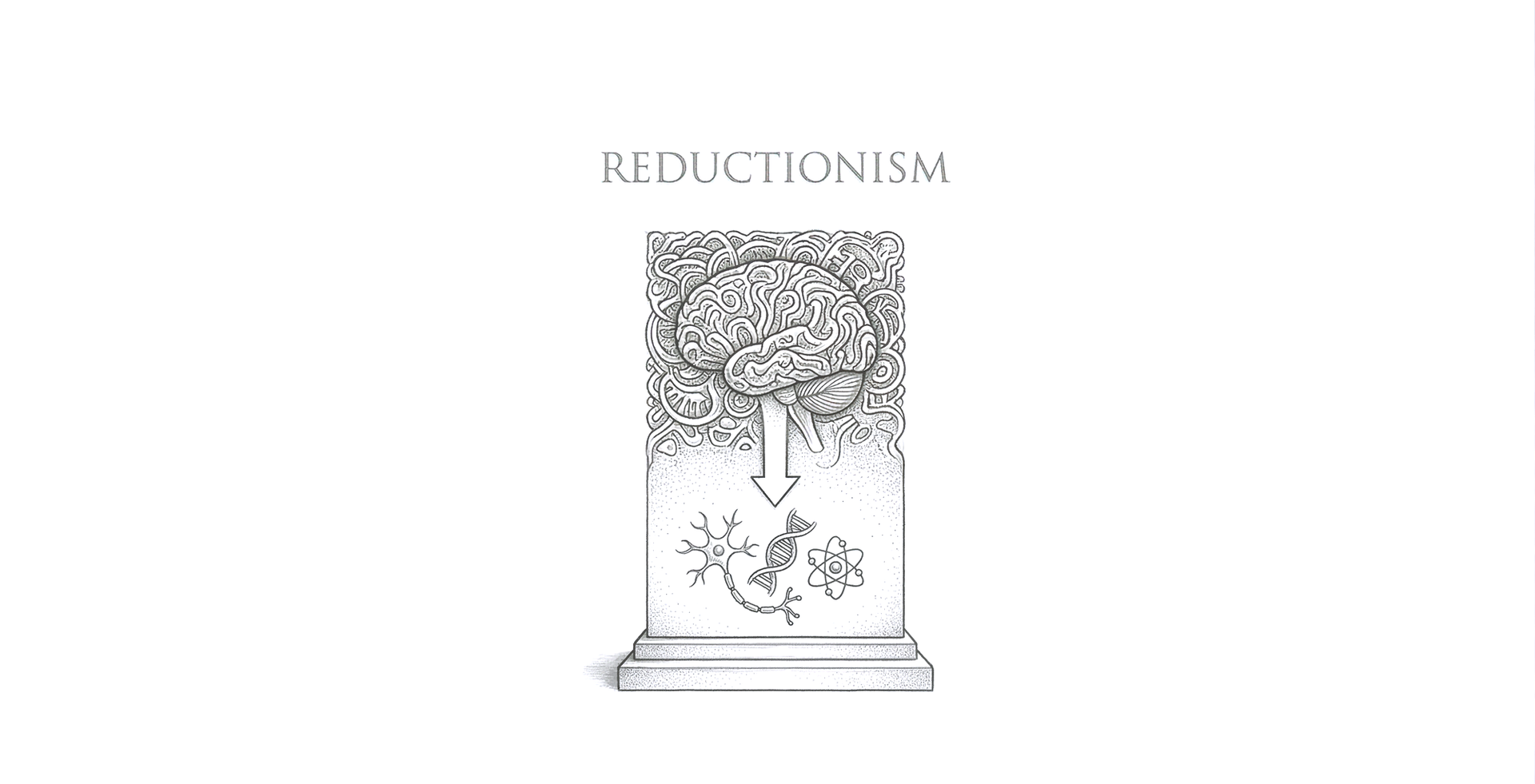
The Origin
Deeply rooted in René Descartes’ Discourse on the Method (specifically Rule 2: breaking complex problems into their smallest parts), and later popularized by classical physics and mechanics.
The Definition
Reductionism is the philosophical position that a complex system is nothing more than the sum of its parts. Therefore, to understand the whole system, you simply need to break it down and analyze its most basic, atomic components.
If you want to understand how a mechanical clock works, you don't stare at the face; you take it apart, study the individual gears and springs, and put it back together.
The Corporate Application
Reductionism is the default problem-solving tool in modern business and engineering. We break annual revenue goals into quarterly OKRs. We break massive software applications into modular microservices. We break user journeys into individual click-paths.
However, the Chief Wise Officer knows that while Reductionism is a brilliant tool for building and debugging, it is a dangerous tool for governing.
1. The Power of the Microservice When a monolithic codebase keeps crashing, you apply Reductionism. You decouple the code. If the payment gateway fails, it shouldn't take down the messaging system. By reducing the software to independent parts, you isolate risk and allow small teams to move incredibly fast.
2. The Blind Spot of Emergence The fatal flaw of Reductionism is that it cannot explain Emergence—the phenomenon where the whole system exhibits properties that the individual parts do not possess. You cannot understand a traffic jam by studying the physics of a single spark plug. Similarly, you cannot understand a toxic corporate culture by looking at individual employee performance reviews. If your executive team only looks at isolated, reduced metrics (KPIs), they will completely miss the emergent, systemic reality of the company.
The Chief Wise Officer's Rule: Use Reductionism to debug your code and execute your sprints. But when making high-level strategic decisions, you must zoom out. A company is not a clockwork machine; it is a complex ecosystem. Optimize the parts, but govern the whole.
No spam, no sharing to third party. Only you and me.
Member discussion