
Gestell (Enframing)
The Origin
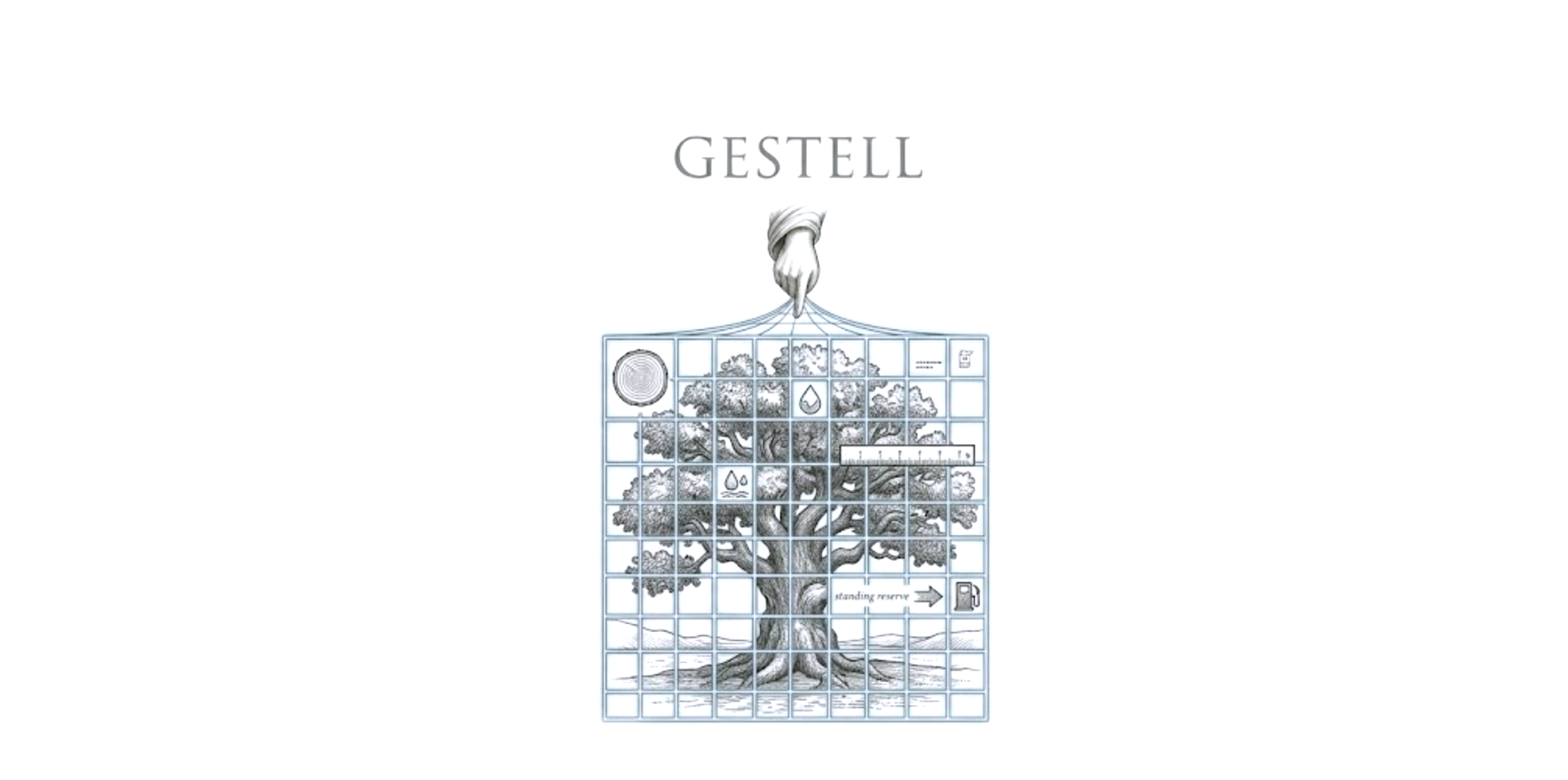
The term stems from the German word Gestell, traditionally translating to a rack, framework, or apparatus. Martin Heidegger radically redefined the concept in his 1954 essay, The Question Concerning Technology. Through a phenomenological lens, Heidegger employed Gestell (often translated as "enframing") to describe the fundamental essence of modern technology, not as a collection of machines, but as a specific mode of revealing reality.
The Definition
In Heideggerian philosophy, Gestell is the framework through which modern technology forces the world to present itself. Under this enframing, nature and human beings are no longer encountered as dynamic entities with inherent meaning. Instead, they are revealed strictly as Bestand, a "standing-reserve" or a stockpile of raw, calculable, and extractable resources awaiting optimization and utilization.
The Corporate Application
In the C-suite, Gestell manifests as a pervasive, structural temptation to view the enterprise, and its broader market, principally through the lens of data extraction and resource optimization. When a Chief Data Officer implements ubiquitous tracking telemetry, they are not merely deploying infrastructure; they are fundamentally reordering the organization's perception of reality. Under this technological framework, the lived experiences of customers and employees recede. They are frequently reduced to a standing-reserve of user engagement metrics, human capital hours, or lifetime value scores. A sales division, incentivized by quarterly revenue quotas, often adopts this enframed mindset, strip-mining customer relationships for immediate transactional yield rather than cultivating resilient, long-term market trust.
This phenomenological flattening creates profound, unobservable systemic risks. When a digital platform is heavily optimized to treat user attention as an extractable resource, product engineering teams, motivated by sprint velocity and retention KPIs, tend to architect algorithmic feedback loops that maximize addiction over utility. By filtering the market through an extractive framework, the enterprise becomes blind to qualitative degradation. Executives operating under Gestell rarely notice the depletion of brand equity or the erosion of their socio-technical ecosystem until a catastrophic market correction occurs. Designing sustainable architecture requires leaders to probabilistically assess whether their technology stack serves human realities or merely enframes them as fuel.
The CWO's Rule
"Technology is not a neutral tool; it shapes executive perception. When enterprise systems enframe customers and employees merely as extractable data, the organization frequently becomes blind to the systemic risks threatening its survival."
No spam, no sharing to third party. Only you and me.


Member discussion