
Discourse on the Method: Building Your Corporate OS
In the early days of a startup, a company survives entirely on heroics.
The founder works 90-hour weeks, relying on sheer force of will to close the first ten enterprise deals. A single "10x engineer" keeps the database from collapsing by writing brilliant, undocumented code at 2:00 AM. The company succeeds because it has exceptional, heroic individuals who possess a deep, intuitive understanding of the product.
But eventually, the company attempts to scale from 50 to 500 employees. Suddenly, the heroics stop working.
You cannot hire 500 geniuses. You cannot rely on spontaneous bursts of midnight brilliance. When a company relies on individual heroism to ship a product or solve a crisis, it does not have a business; it has a fragile dependency. Implicit knowledge, the stuff trapped inside the founder’s head, does not scale. Only explicit systems scale.
To bridge this gap, the Chief Wise Officer must realize what René Descartes realized in 1637: Raw intellect is useless without a reproducible system. Descartes looked at the scientific community of his era and saw brilliant scholars constantly making errors, arguing in circles, and building on faulty logic. To fix this, he didn't try to make people smarter. He wrote Discourse on the Method, a strict, four-step algorithm designed to guide ordinary human reasoning toward absolute truth.
A great enterprise is not a collection of geniuses. It is a collection of ordinary professionals operating on a genius Method.
The End of Executive Intuition
When modern executives try to solve a complex problem ,like entering a new market, restructuring a failing division, or rebuilding a legacy codebase, they almost always rely on "gut instinct" and past experience. But in a highly complex, rapidly shifting tech landscape, your intuition is often a liability. Intuition is just pattern recognition based on past environments that no longer exist.
Descartes designed his Method specifically to remove human intuition, ego, and assumption from the problem-solving process. He reduced the pursuit of truth down to four uncompromising rules.
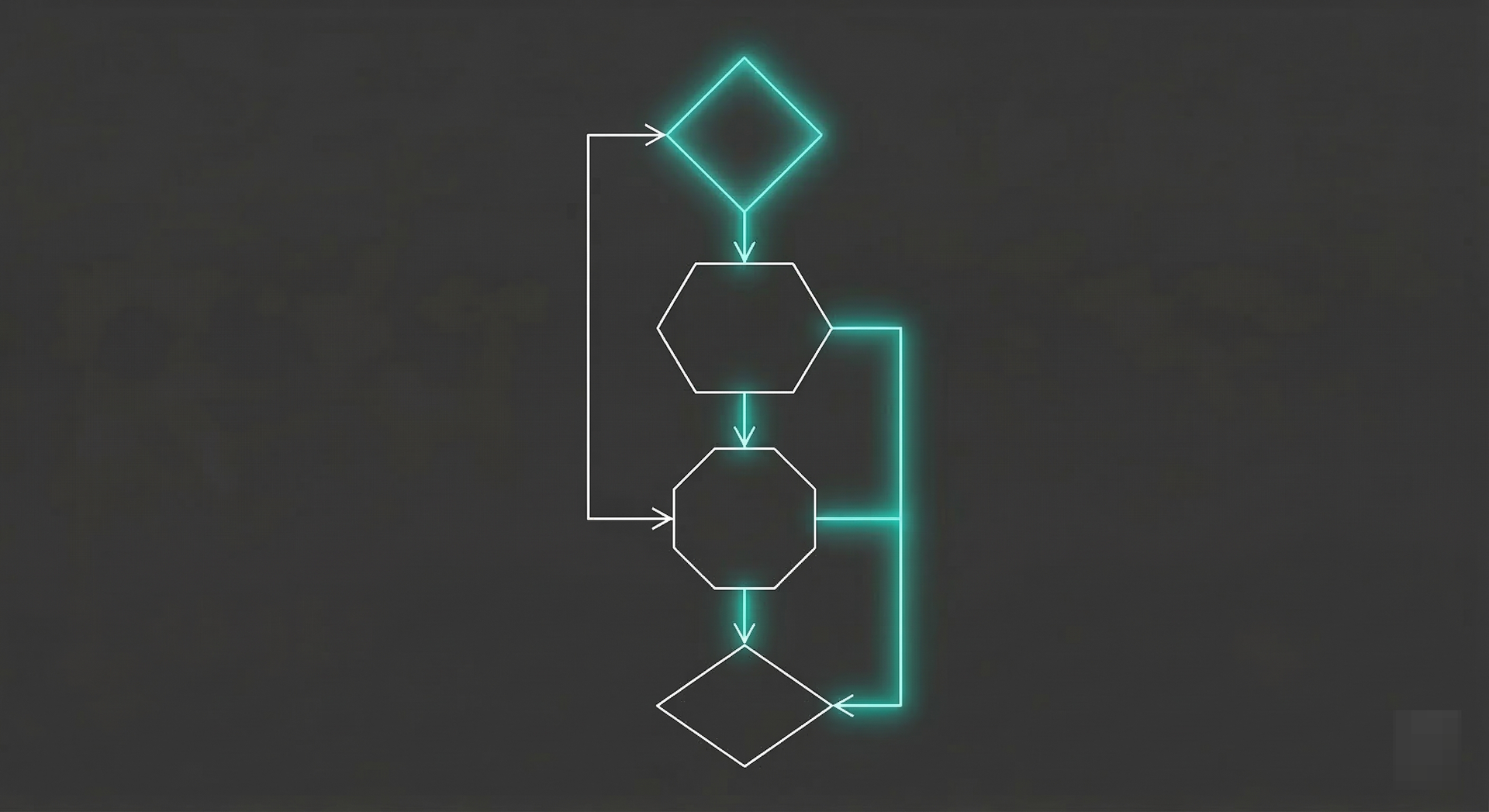
For the CWO, these four rules are not just philosophy; they are the blueprint for your Corporate Operating System (OS). When you force your executive team to run every major strategic initiative through this Cartesian algorithm, you eliminate the need for heroics.
Rule 1: Epistemological Hygiene (Radical Doubt)
"The first was never to accept anything for true which I did not clearly know to be such; that is to say, carefully to avoid precipitancy and prejudice...", René Descartes
In corporate strategy, this is the rule of Epistemological Hygiene. It means aggressively cleaning up how your company "knows" what it knows.
Companies accumulate massive amounts of "assumptive debt." When the VP of Marketing says, "Millennials want short-form video content," or the CTO says, "We need to migrate to Kubernetes to scale," the CWO must apply Rule 1.
Are those undeniable, data-backed truths for your specific product at this exact moment, or are they just inherited industry assumptions?
The Implementation:
- Kill the HIPPO: The Highest Paid Person's Opinion is the enemy of Rule 1. You must build a culture where a junior data analyst is empowered to doubt the CEO's assumption if the data does not present itself "clearly and distinctly."
- Falsifiable Strategy: Before any budget is approved, the team must explicitly list the core assumptions the project relies on. Then, they must ask: What exact evidence would prove this assumption wrong? If you cannot prove the premise with distinct evidence, you must doubt it and run a cheap test before committing resources.
Rule 2: The Atomic Deconstruction of Strategy
"The second, to divide each of the difficulties under examination into as many parts as possible, and as might be necessary for its adequate solution.", René Descartes
Monolithic problems paralyze organizations. When a CEO sets a goal like, "We need to fix our user retention problem," the team freezes. It is too large, too abstract, and too entangled.
Descartes understood that the human brain cannot solve massive complexities. Rule 2 forces the team to shatter the monolith. You do not solve the giant problem; you solve the atomic pieces.
The Implementation:
- Micro-Metrics: Break "retention" down into 30 distinct, measurable micro-interactions. The loading speed of the dashboard. The clarity of the onboarding email. The number of clicks required to export a report.
- Microservices Architecture: In engineering, Rule 2 is the exact philosophy behind microservices. You do not build one massive, tightly coupled application where a single bug brings down the whole system. You break the code into small, distinct, independent services that can be isolated, understood, and fixed by a small team.
Rule 3: The Architecture of Sequencing
"The third, to conduct my thoughts in such order that, by commencing with objects the simplest and easiest to know, I might ascend by little and little, and, as it were, step by step, to the knowledge of the more complex...", René Descartes
Once a project is deconstructed, ambitious teams often make a fatal error: they try to build the most complex, glamorous piece first. They want to build the AI recommendation engine before the basic search bar even works. They launch a massive, two-year "Digital Transformation" project all at once.
Rule 3 enforces strict, sequential execution. This aligns perfectly with Gall's Law, which states that a complex system that works is invariably found to have evolved from a simple system that worked. You cannot build a complex system from scratch.
The Implementation:
- The Sequential MVP: You must build and validate the simplest, lowest-level foundation before you are allowed to move up the ladder of complexity. If you are building a marketplace, you do not build the automated matching algorithm first. You manually connect one buyer to one seller (the simplest object). Only when that succeeds do you add the next layer of complexity.
- Dependency Mapping: The CWO forces project managers to map the absolute sequence of truths. A cannot be built until B is perfectly understood. Strict adherence to order prevents teams from getting six months into a build only to realize the foundational database architecture is wrong.
Rule 4: The Cartesian Pre-Mortem (Exhaustion)
"And the last, in every case to make enumerations so complete, and reviews so general, that I might be assured that nothing was omitted.", René Descartes
When you break a complex system down into tiny parts (Rule 2) and solve them sequentially (Rule 3), you run a very specific risk: you lose the forest for the trees. You fix all the micro-interactions, but the overall product still feels disjointed.
Rule 4 is the ultimate Quality Assurance rule. It is the synthesis that follows the reduction. Before a strategy is approved or code is shipped to the public, the team must perform a rigorous, exhaustive review of the entire system.
The Implementation:
- The Pre-Mortem: Before launch, gather the team and assume the project has failed catastrophically. Work backward. Enumerate every single possible reason it failed. Did we miss a variable in the market? Did we omit a critical security check in the sequence?
- The Checklist Manifesto: Descartes demanded exhaustive enumerations. In aviation and surgery, this is the checklist. You do not rely on memory to ensure every step was completed. You rely on a rigorous, documented review process that ensures the atomic parts have successfully reformed into a functional, cohesive whole.
Conclusion: The System is the Savior
You cannot mandate brilliance. You cannot write a corporate memo demanding that your employees possess better "gut instincts" or work 90-hour weeks.
But you can mandate a Method.
When you install Descartes' four rules as your corporate operating system, the baseline intelligence of your organization skyrockets. Meetings become shorter because you are debating evidence, not opinions. Strategies become bulletproof because they are deconstructed and sequenced.
The burden of success finally shifts off the shoulders of the exhausted, heroic founder, and onto the unshakeable framework of the Method. Your company no longer needs to rely on heroes; it simply runs the algorithm.
No spam, no sharing to third party. Only you and me.


Member discussion