
The Ontology of the Enterprise: Reconciling the Data Lake and the Data Mesh
The Friction of Centralized Context
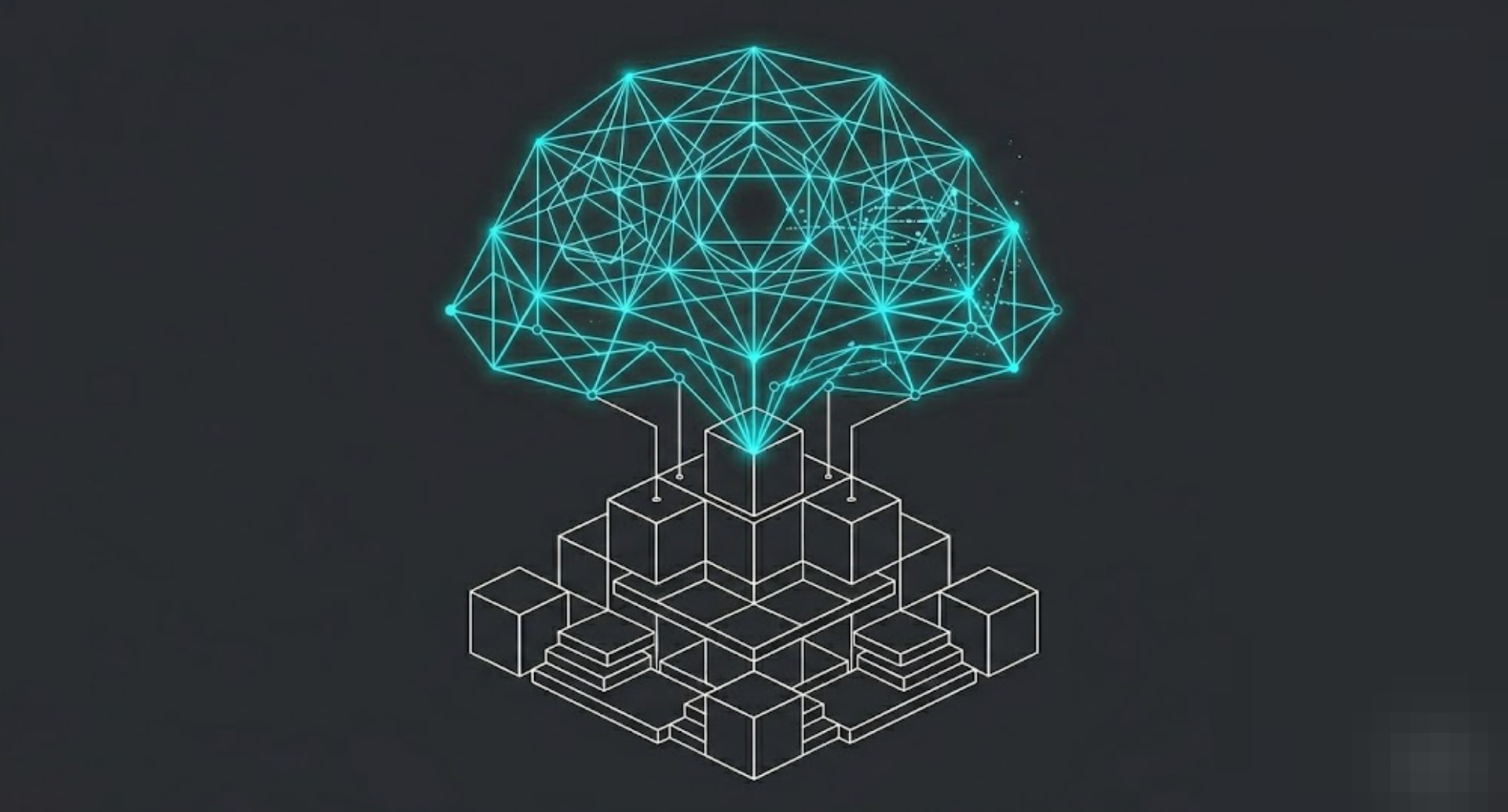
Over the last decade, the centralized Data Lake has emerged as the foundational infrastructure for enterprise intelligence. From a purely technological standpoint, it is highly effective: a single, robust repository capable of storing vast volumes of raw, unstructured data to power machine learning models and central analytics.
However, as an organization scales, a distinct operational friction often emerges not from the technology itself, but from the human operating model layered on top of it. Organizations frequently assume that because the storage of data is centralized, the ownership and business logic of that data should also be centralized within a singular Data Engineering or IT team.
This creates a systemic bottleneck. A central data team is typically optimized for infrastructure stability, query performance, and pipeline maintenance. Yet, they are frequently tasked with translating the highly specific, rapidly shifting business logic of disparate domains, Marketing, Supply Chain, Finance, into standardized dashboards. The latency occurs because the central team does not possess the granular context to intuitively know how "Sales Accepted Leads" differ by region this quarter, or how Logistics recently adjusted its landed-cost formula. When a central team is forced to act as the universal translation layer for the entire enterprise, the ticket queue backs up, and analytical velocity slows down.
Deleuze, Guattari, and the Rhizomatic Shift
To understand this structural limitation, we can apply the philosophical framework of Gilles Deleuze and Félix Guattari in A Thousand Plateaus. They draw a critical distinction between two types of structural organization: the Arborescent and the Rhizome.
An arborescent (tree-like) structure is centralized and hierarchical. All branches trace back to a foundational trunk. Conversely, a rhizome (like a root system of ginger or a fungal network) is a decentralized multiplicity. Any node in a rhizome can connect to any other node independently; it is defined by horizontal connections rather than vertical hierarchy.
In corporate data architecture, the physical storage layer (the Data Lake) is naturally arborescent. It requires central governance, security, and unified compute resources. However, business context is inherently rhizomatic. The way Marketing understands a customer is fundamentally different from how Finance understands that same customer, yet both perspectives are valid and interconnected.
The organizational failure occurs when leadership attempts to force rhizomatic business logic through an arborescent IT structure. Deleuze and Guattari argue that rigid arborescent structures often struggle to process complex, heterogeneous realities. The modern enterprise requires a synthesis: maintaining the arborescent foundation while enabling a rhizomatic network of intelligence above it.
The Epoché Analysis: Reactions to the Bottleneck
When executive leadership encounters the friction of a backed-up central data team, they generally explore a few rational, but often incomplete, interventions:
- Expanding the Center (Headcount Scaling): The organization hires more central data analysts and engineers to clear the queue. This often yields diminishing returns because it treats a contextual deficit as a bandwidth problem. Adding engineers does not intrinsically add domain expertise.
- The "Shadow IT" Rebellion (Fragmented Silos): Frustrated by reporting delays, business units rationally deploy their own budgets to procure localized SaaS BI tools. This provides high localized velocity but fractures the enterprise ontology, leading to executive meetings where different departments present conflicting revenue numbers.
- The Master Ontology Committee (Bureaucratic Standardization): Leadership forms cross-functional committees to define a single, universal meaning for every metric. This tends to stall operational momentum, as departments spend months negotiating definitions that naturally require different contextual parameters.
These approaches frequently struggle because they view the friction as a purely technical or administrative issue, rather than recognizing it as an architectural mismatch between data storage and data ownership.
The CWO Strategy: The Socio-Technical Mesh
To scale analytical capability across complex domains, the C-Suite might consider shifting from a purely centralized operating model to a Data Mesh—treating the Data Lake as the underlying technology, while applying decentralized principles to manage the ownership of the data.
- Decouple Storage from Domain Ownership: Retain the centralized Data Lake (or Data Warehouse) for underlying storage, compute, and security. However, decentralize the responsibility for data modeling back to the cross-functional domain teams. The Supply Chain team owns the "Logistics Data Product," and Sales owns the "Revenue Data Product."
- Treat Data as a Product (Interoperability): Instead of forcing all data to conform to a single centralized schema, domains expose their clean, curated data to the rest of the enterprise via standardized contracts (APIs or secure views). This allows Marketing to consume Finance's data reliably without needing IT to build a custom pipeline for them.
- Implement Federated Computational Governance: The central data team shifts its mandate from "building dashboards" to "providing self-service infrastructure." They engineer the automated guardrails (PII masking, access controls, uptime monitoring) that allow the domain teams to build and share their data products autonomously and safely.
Conclusion
The Data Lake remains a powerful engine for enterprise storage and machine learning, but treating a central IT team as the sole arbiter of business truth often creates an insurmountable cognitive bottleneck. The Chief Wise Officer recognizes that an enterprise is a multiplicity. By utilizing the Data Lake for infrastructure and the Data Mesh for human ownership, organizations can build an architecture that supports both foundational security and decentralized velocity.
"A rhizome has no beginning or end; it is always in the middle, between things, interbeing, intermezzo. The tree is filiation, but the rhizome is alliance, uniquely alliance." — Gilles Deleuze & Félix Guattari, A Thousand Plateaus
No spam, no sharing to third party. Only you and me.



Member discussion