
Crudeltà Bene Usata
The Origin
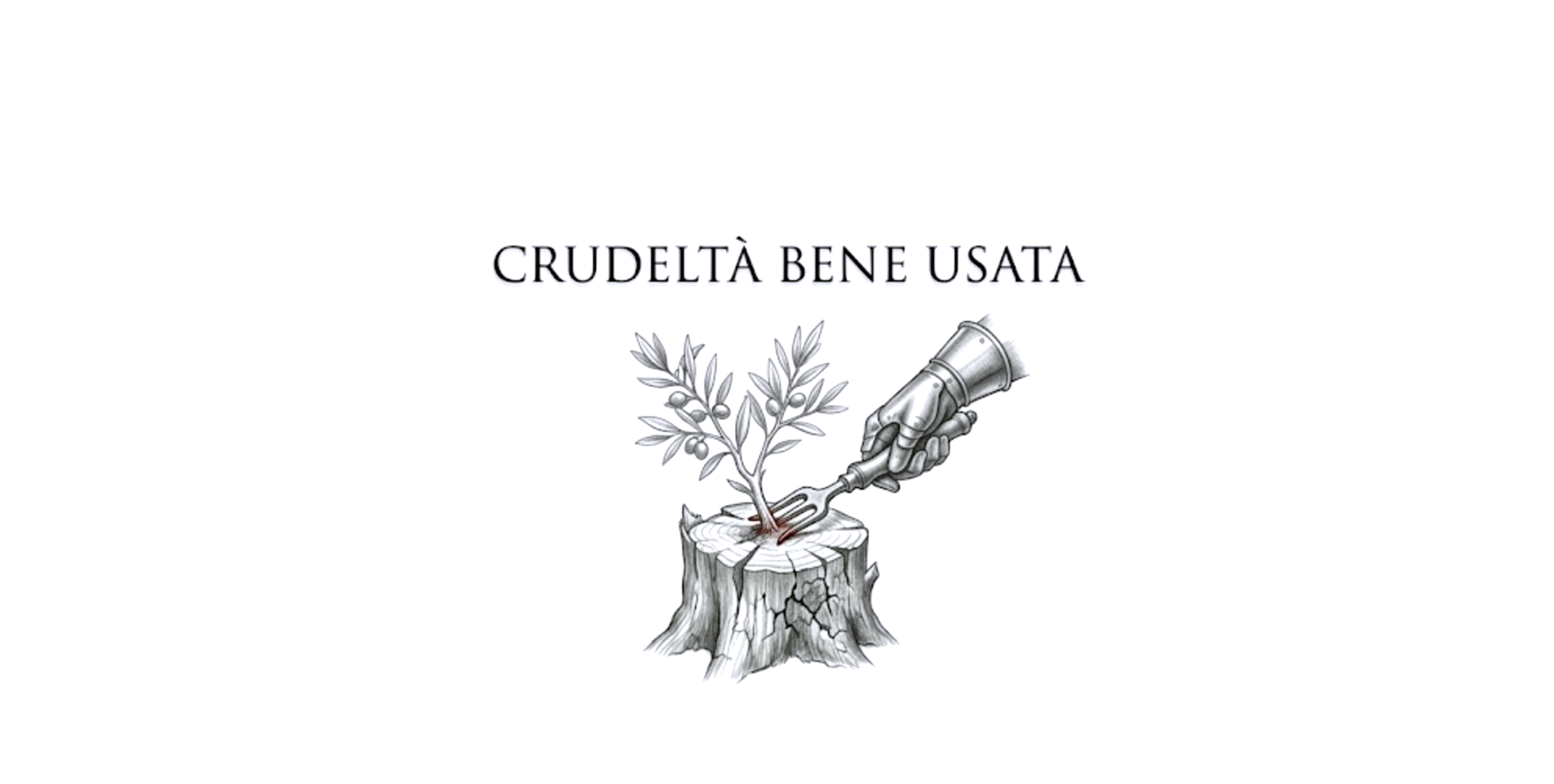
The concept of crudeltà bene usata (cruelty well-used) is rigorously articulated by Niccolò Machiavelli in Chapter VIII of his 1532 treatise, The Prince. Analyzing rulers who seized and maintained power through severe means, Machiavelli establishes a strict, clinical distinction between structural violence that secures a state and violence that incrementally destabilizes it.
The Definition
In Machiavellian realism, crudeltà bene usata dictates that necessary injuries must be inflicted comprehensively and all at once (tutte insieme). By front-loading the pain, the severity is experienced briefly, allowing the populace to recover and recalibrate. Conversely, "cruelty poorly used" begins small and gradually increases over time. This drawn-out approach generates a perpetual state of anxiety, compounding animosity and paralyzing the structural entity.
The Corporate Application
During macroeconomic contractions or major architectural shifts, the C-suite frequently faces the necessity of painful structural changes, such as workforce reductions or the ruthless deprecation of beloved legacy platforms. However, executives, heavily incentivized by the desire to maintain near-term public relations and internal popularity, often attempt to mitigate immediate friction. A Chief Financial Officer, focused on incremental cost containment, might authorize localized, rolling waves of layoffs across consecutive quarters. This drawn-out approach epitomizes Machiavelli's "cruelty poorly used." It probabilistically fractures enterprise morale. Remaining engineers and product managers, motivated primarily by personal job security, tend to abandon long-term infrastructure projects to focus strictly on political survival, paralyzing the organization's operational velocity.
Applying crudeltà bene usata requires the executive to act with unsentimental decisiveness. If a massive reduction in technical debt or a structural layoff is required to preserve the corporate runway, it must be executed entirely in a single, comprehensive stroke. The executive cuts deeply enough initially so that the surviving organization probabilistically knows the worst is over. This Machiavellian posture demands front-loading the operational pain, accepting the immediate, intense internal shock in exchange for long-term systemic stability. By removing the looming threat of future cuts, the C-suite allows the enterprise to transition back to a state of productive equilibrium, refocusing remaining resources on market execution rather than internal defense.
The CWO's Rule
"Incremental cuts do not soften the blow; they paralyze the enterprise. True operational security requires front-loading the necessary pain in a single, decisive stroke, allowing the surviving structure to rebuild without the shadow of perpetual anxiety."
No spam, no sharing to third party. Only you and me.



Member discussion