The Suspension of Judgment: Crisis Management for Skeptics
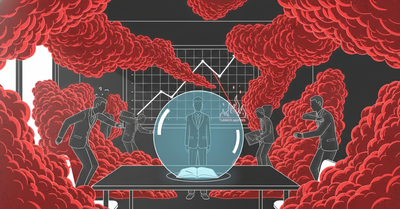
In a crisis, your brain screams "Do something!" But history shows that the instinct to act fast is often fatal. Why the best leaders use the ancient tool of "Epoché" to stop panic and find the truth.
Lexicon: Epoché
Epoché is the "Suspension of Judgment." Why holding back your opinion is the fastest path to mental clarity.
The Pre-Mortem: Stoicism for Product Managers
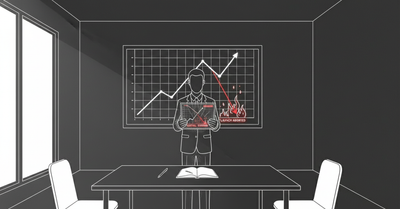
Don't ask "What might go wrong?" Ask "The project failed. Why?" How the Stoic practice of 'Premeditatio Malorum' saves software projects.
Lexicon: Dogmatism
Dogmatism is the belief that the case is closed. In strategy, it is the refusal to investigate reality in favor of "Best Practices."
The Feature Factory: When Velocity Becomes a Vice
We obsess over "shipping" code to avoid the harder question: Does any of this matter? Why "Velocity" is often just Bad Faith in disguise.
Lexicon: Skepsis
A Skeptic is not a Cynic. A Skeptic is an Investigator. Why leaders need more "Skepsis" (Inquiry) and less "Dogma."
The Physician of Silence: A Comprehensive Analysis of Sextus Empiricus, the Pyrrhonian Tradition, and the Architecture of Suspended Judgment
In a business world obsessed with "data-driven certainty," Sextus Empiricus is the antidote. This ancient Roman doctor taught that the only path to tranquility (Ataraxia) is the suspension of judgment. A complete biography and guide to the Pyrrhonian way of life.
Lexicon: Radical Freedom
You are "condemned to be free." Why your past success guarantees nothing, and why you must "re-hire" yourself every morning.
Lexicon: Contingency
Why do successful companies suddenly collapse? Sartre's concept of "Contingency" explains that nothing in business is "necessary." It is all accidental.
"Hell is Other People" (The Sociology of Meetings)
It doesn't mean people are annoying. It means they hold the keys to your identity. Applying Sartre's famous quote to corporate politics.
Lexicon: The Look (Le Regard)
Why does a Performance Review feel so dehumanizing? Sartre's concept of "The Look" explains how being watched turns us from free humans into fixed objects.
Lexicon: Mauvaise Foi (Bad Faith)
It's not lying to others; it's lying to yourself. Sartre's concept of "Bad Faith" explains why we pretend we have no choice.
Bad Faith and the Danger of "I Had No Choice"
"I'm just following orders." "The market made me do it." Sartre calls this Bad Faith. Why leaders must stop pretending they are victims of circumstance.
Lexicon: Facticity
You can't control the market or the economy. That is your "Facticity." But Sartre argues you can always control your response.
Lexicon: Existence Precedes Essence
The foundational rule of Existentialism. Why your "Brand Identity" means nothing if your actions don't match. Sartre's guide to corporate authenticity.
The Burden of Freedom: A Phenomenological Analysis of Jean-Paul Sartre
Jean-Paul Sartre’s philosophy offers a powerful framework for the modern "Chief Wise Officer." By rejecting the "Spirit of Seriousness" and embracing radical agency, leaders can build authentic, innovative cultures and drive meaningful change without excuses.
Lexicon: Simulation
Why do managers prefer spreadsheets to reality? The philosophical danger of "Simulation" and how to avoid the "Green Dashboard" fallacy.
Lexicon: Homo Faber
We are not "Man the Wise"; we are "Man the Maker." Bergson explains why our brains are hardwired to treat everything—including people—as tools to be used.
The Digital Twin of the Org: Simulating the Re-org Before You Fire
Stop guessing with your Org Chart. How "Digital Twins" allow you to simulate the chaos of a restructure in a sandbox before you inflict it on real people.
Lexicon: Dynamic Religion
The bureaucracy (Static) preserves the company, but only the mystic spark (Dynamic) can reinvent it. Bergson's guide to breaking the rules.
Lexicon: Static Religion
Why do innovative startups inevitably turn into boring bureaucracies? Bergson's concept of "Static Religion" explains the defensive mechanism of organizations.
Bergson’s "Duration" vs. The Gantt Chart: Why Timelines Fail
Why does a 5-minute interruption destroy an afternoon of work? Henri Bergson's concept of "Duration" explains the difference between Clock Time and Creative Flow.
Lexicon: Intuition (vs. Intellect)
It's not a gut feeling; it's a method. Bergson's "Intuition" is the ability to see the flow of reality, while "Intellect" only sees the snapshots.
Lexicon: Élan Vital
Why data can optimize, but only the "Vital Force" can innovate. Henri Bergson's concept of Élan Vital explained for business leaders.
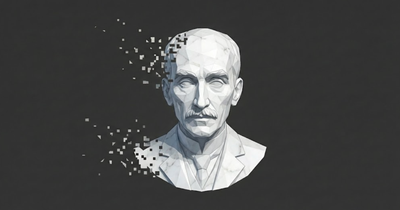
The Architect of Duration: Henri Bergson’s Life, Philosophy, and Legacy
Before the Beatles, there was Bergson. From the "Bergsonism" mania of the 1900s to his historic debate with Einstein, this biography explores why the philosopher of "Duration" is the missing link for modern leadership and the age of AI.
Lexicon: Durée (Duration)
Henri Bergson's concept of "La Durée" explains why a 5-minute interruption destroys hours of work. The difference between "Clock Time" and "Real Time."
Lexicon: Determinism
Why "Free Will" is a dangerous illusion in management. Spinoza's concept of Determinism teaches us to stop blaming people and start fixing systems.
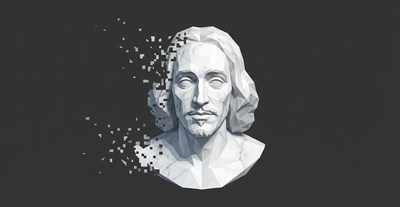
Benedictus de Spinoza: The Geometer of Liberty
Explore the life of Baruch Spinoza, from his 1656 excommunication to his optical work with Christiaan Huygens. Discover the man who equated God with Nature.
Lexicon: Potentia (vs. Potestas)
Do you have power over people (Potestas) or power to act (Potentia)? Spinoza's critical distinction for modern leadership.
Lexicon: Causa Sui
Spinoza's definition of true power. Why the goal of every strategy should be to move from "Dependency" to being "Causa Sui" (The Cause of Itself).
Conatus: The Unstoppable Will to Persist in Business
Why do "Zombie Projects" refuse to die? The Chief Wise Officer looks at Spinoza's law of Conatus to understand the hidden physics of organizational resistance.
Lexicon: Sub Specie Aeternitatis
Spinoza's ultimate mental tool. Why viewing your quarterly crisis "under the aspect of eternity" is the only way to maintain strategic sanity.